
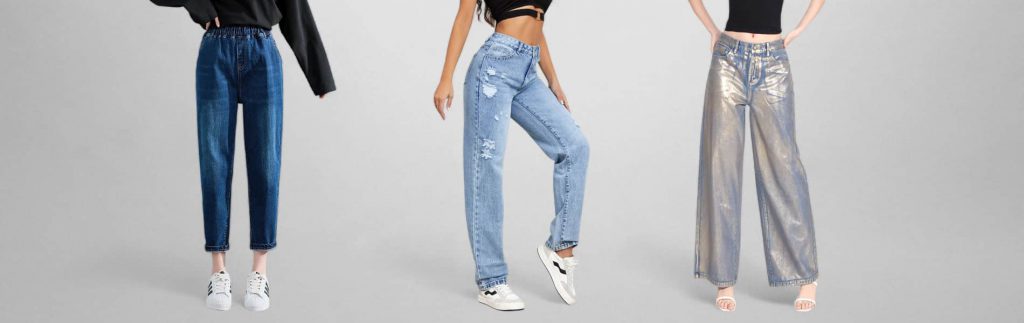
Quick answer: A pair of jeans can cost about $8 to $60+ to manufacture depending on denim quality, wash treatments, trims, stitching complexity, MOQ, and whether the product is basic, stretch denim, selvedge, or premium private label denim.
Jeans represent one of the most complex garments to manufacture in the apparel industry. The multiple construction steps, specialized materials, and finishing processes create cost variables that many new brands underestimate.
A basic pair of jeans costs $8-15 to produce through overseas manufacturing, while premium denim can run $25-60 or more depending on fabric quality, construction details, and finishing treatments.
Denim Fabric: Your Largest Investment
Denim fabric dominates your production budget. Standard denim weighs 10-14 ounces per square yard, with each pair requiring approximately 1.5-2 yards.
Basic ring-spun denim costs $3-5 per yard wholesale. Mid-grade selvedge denim runs $8-15 per yard, while premium Japanese selvedge can reach $20-40 per yard. Stretch denim containing elastane costs 15-25% more than 100% cotton varieties but has become industry standard.
Specialty Denim Treatments
Raw denim requires minimal processing and costs less than pre-washed varieties. Stone washing adds $1.50-3 per pair, while enzyme washing runs $1-2. Distressing and hand-sanding can add $3-8 depending on complexity.
Eco-friendly washing processes like ozone treatment or laser distressing cost 20-40% more than traditional methods but appeal to sustainability-focused brands.
Labor and Construction Costs
Jeans require significantly more labor than simpler garments. A basic five-pocket jean involves 15-20 separate sewing operations, while premium styles can require 30+ steps.
Domestic production in the United States costs $15-30 per pair for labor alone. Overseas production in countries like Bangladesh, Pakistan, or Vietnam reduces labor costs to $3-10 per pair.
Quality Control Challenges
Denim production requires rigorous quality control. The heavy fabric stresses seams, hardware fails more frequently, and washing processes can reveal construction defects. Professional QC adds $0.75-2 per pair but prevents costly returns.
Hardware and Trim Components
Jeans require more hardware than virtually any other garment category. Budget brass rivets cost $0.05-0.10 each, with each pair requiring 6-8 rivets. Premium copper or branded rivets run $0.15-0.40 each. Metal buttons range from $0.20-0.80, while custom designs can cost $0.50-2 each.
Zippers represent a significant expense. Heavy-duty brass zippers cost $1-2.50, while premium YKK zippers run $1.50-4 depending on length. Plastic zippers reduce costs to $0.40-1.20 but communicate lower quality.
Thread for denim requires special consideration. The heavy fabric demands strong, thick thread that costs 30-50% more than standard apparel thread. Contrast topstitching uses even more thread and requires skilled operators.
Production Cost Breakdown
| Jean Style | Fabric Cost | Labor | Hardware/Trim | Washing | Total Cost |
| Basic Budget | $4-6 | $3-6 | $1.50-2.50 | $0.50-1 | $9-15.50 |
| Mid-Range | $8-12 | $5-10 | $2-4 | $1.50-3 | $16.50-29 |
| Premium | $15-25 | $8-18 | $3-6 | $3-7 | $29-56 |
| Luxury Selvedge | $25-45 | $12-25 | $4-8 | $4-10 | $45-88 |
These figures assume production volumes of 500-1,000 units. Smaller quantities increase per-unit costs by 40-60%, while orders exceeding 5,000 units can reduce costs by 20-30% through better fabric pricing and streamlined production.
Hidden Costs in Denim Production
Pattern development for jeans costs more than simpler garments due to fit complexity. Professional pattern making runs $500-1,500 per style, with grading across sizes adding another $200-600.
Packaging varies from simple poly bags at $0.20-0.40 per pair to premium boxes at $2-6 per pair. Hangers and security tags add another $0.30-1 for retail-bound products.
Washing and finishing create environmental compliance costs. Wastewater treatment and chemical disposal add $0.50-2 per pair in regions with strict regulations.
Labels, patches, and branding elements contribute $0.60-2 per pair. Leather patches cost more than paper labels, while embroidered details add premium touches that increase both expenses and perceived value.
Factors That Impact Your Production Costs
Several key variables determine where your jeans fall in the cost spectrum. Fabric weight and quality make the biggest difference: lightweight denim at 8-10 oz costs less but feels cheaper to consumers, mid-weight 12-14 oz offers the best value perception, while heavyweight 16+ oz denim commands premium prices. Selvedge denim adds significant expense but creates market differentiation.
Construction details also matter. Chain-stitching versus lockstitching affects both cost and aesthetics, while reinforced stress points and bar tacks add labor time but improve durability. Fit complexity plays a role too—skinny jeans require more precise fitting and often use stretch denim, while relaxed fits use less fabric and allow more tolerance in construction. Finally, finishing treatments create the largest variable cost, with the difference between raw denim and heavily distressed jeans representing $5-12 in production costs.
Smart Strategies to Optimize Costs
Starting with proven patterns rather than custom development saves thousands in sampling costs. Many manufacturers maintain libraries of successful patterns that you can modify slightly for differentiation.
Limiting your size range to core sizes reduces inventory complexity. Successful denim brands often start with 4-5 sizes representing 80% of their market rather than offering 7-8 sizes from day one.
Choosing hardware wisely balances cost and quality perception. Starting with stock hardware in standard finishes keeps costs manageable while you validate demand. Consider offering both raw and washed options—raw denim costs less to produce but appeals to denim enthusiasts, while washed styles attract mainstream consumers.
Production Volume and MOQ Considerations
Denim manufacturers typically require MOQs of 500-1,200 pieces per style due to specialized equipment and setup. Some premium mills demand even higher minimums of 2,000-3,000 meters of fabric, translating to roughly 1,500-2,000 pairs of jeans.
Working with established wholesale suppliers like Fashion Atlas Group provides access to manufacturers who’ll work with reasonable order quantities while maintaining quality standards. Fabric purchasing often requires separate minimums—mills may require 1,000-2,000 yard minimums per denim style, effectively forcing larger runs or limiting fabric options.
Calculating Retail Pricing for Jeans
The standard retail markup for jeans typically runs higher than basic apparel. Jeans costing $15 to produce often wholesale for $35-45 and retail for $70-100. Premium jeans with $35 production costs can retail for $150-250 based on brand positioning.
The durability and longevity of jeans justify higher markups than fashion items. Consumers expect jeans to last years rather than seasons, creating different value perceptions. Direct-to-consumer brands can offer better value by eliminating wholesale margins while maintaining 75-80% gross margins.
Sustainability and Its Cost Impact
Organic cotton denim costs 25-40% more than conventional cotton but appeals to growing environmental consciousness. Water-saving washing processes add 15-30% to finishing costs but reduce environmental impact.
Recycled denim and innovative materials like Tencel denim command premium prices in both production and retail. Ethical manufacturing certifications like Fair Trade add $1-3 per pair but provide credibility for brands making ethical claims.
Working with the Right Manufacturing Partners
Denim production requires specialized expertise that not all manufacturers possess. Fashion Atlas Group connects brands with experienced denim manufacturers across multiple price tiers and production capabilities.
Ready to Launch Your Denim Line?
Understanding production costs is essential, but successfully manufacturing jeans requires navigating complex supply chains and technical specifications. From selecting the right denim weight to choosing appropriate washing treatments, countless decisions impact your final product.
Contact Fashion Atlas Group today to discuss your denim project. Our team will help you understand specific production costs for your designs, recommend strategies to optimize quality and value, and connect you with manufacturers who match your vision and budget.
Get started with a free consultation and discover how we can help you produce exceptional denim at competitive costs.
FAQ
What is the average cost to make jeans?
Basic jeans may cost around $8-15 to produce overseas, while premium denim, specialty washes, custom trims, and higher-quality construction can raise production costs to $25-60 or more.
Why are jeans expensive to manufacture?
Jeans require denim fabric, reinforced seams, hardware, pockets, labels, washing, finishing, and quality checks. Each additional treatment or construction detail increases time and cost.
How much does denim fabric affect cost?
Denim is usually the largest cost driver. Basic denim is cheaper, while stretch denim, selvedge denim, organic cotton denim, and premium Japanese denim can significantly increase the final unit price.
Do washing and distressing treatments increase cost?
Yes. Stone washing, enzyme washing, sanding, whiskering, distressing, ozone washing, and other treatments add processing time, labor, and quality control requirements.
Can jeans be made with private labels and trims?
Yes. Jeans can include custom buttons, rivets, leather patches, woven labels, hang tags, packaging, pocket prints, and other branding details depending on the project.
Can Fashion Atlas Group help with denim production?
Yes. We can help with denim sourcing, supplier comparison, sampling, wash development, trims, packaging, quality control, and production coordination for jeans projects.
Still have questions?
If you need help with materials, sourcing, MOQ, packaging, or production, don’t hesitate to book a short call with Fashion Atlas Group. We’ll help you understand the best next step for your product.