
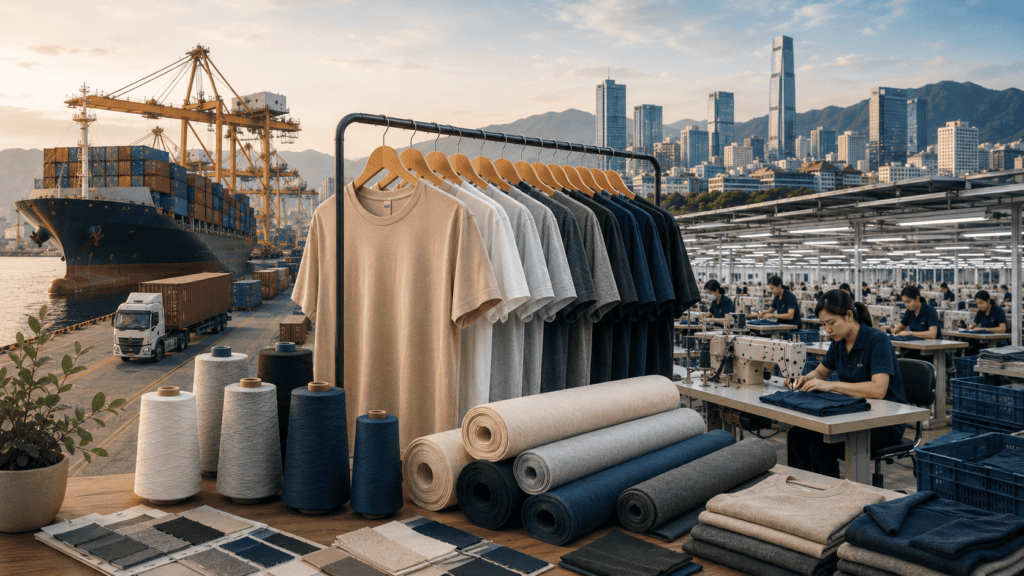
Vietnam is often presented as an attractive alternative for apparel production, but choosing a country is only the beginning of the sourcing decision. Two suppliers in the same region may differ significantly in product expertise, minimum order requirements, access to materials, quality systems, available capacity, and export experience.
A successful production program therefore depends on more than receiving a competitive quote from a factory. Brands need to understand what the supplier can manufacture, where the fabrics and trims will come from, how samples will be approved, and who will manage quality control and delivery.
Vietnam may be a practical option for brands with clear product specifications, realistic order volumes, and enough time to coordinate materials and sampling before bulk production. It can be more difficult when a collection is still being developed, the order is extremely small, or the launch depends on materials that are not readily available.
The supplier’s production model also matters. Some factories focus primarily on cutting, sewing, and finishing, while others can coordinate materials, labels, packaging, and export preparation. A sourcing or manufacturing partner may manage several of these stages across different suppliers.
Before deciding whether clothing manufacturing in Vietnam is suitable for your brand, examine the entire production setup rather than relying on general claims about cost or quality. The ten questions below focus on the parts of the decision that are easiest to overlook when comparing Vietnamese suppliers.
1. Who Are You Actually Working With?
Brands exploring clothing manufacturing in Vietnam should first identify who will be responsible for each stage of the order. A factory, trading company, sourcing agent, and manufacturing partner may all offer apparel production, but their roles are different.
A CMT factory generally focuses on cutting, sewing, and finishing. The buyer provides the product specifications and may also supply the fabric and trims or nominate approved material suppliers. This model gives the brand greater control over materials, but it also requires more coordination.
Under a full-package or OEM arrangement, the manufacturer can source approved materials, produce the garments, add labels and packaging, and prepare the finished order for shipment. The brand still needs to provide clear specifications, approve materials, and confirm samples before bulk production begins.
An ODM supplier may offer existing designs, patterns, or product concepts adapted with different fabrics, colors, branding, or construction details. This can shorten development, although the brand should clarify design ownership and exclusivity before placing an order.
The important point is that two suppliers quoting the same garment may be taking responsibility for very different parts of the process.
Shipping terms such as FOB, EXW, or DDP should be discussed separately. They describe how delivery responsibilities, costs, and risks are divided; they do not define the production model.
Understanding these roles helps the brand compare quotations accurately. A lower factory price may exclude material sourcing, inspections, packaging, documentation, or logistics that another provider includes.
2. Can the Supplier Be Verified?
Before moving forward, brands should verify the supplier’s registered name, business address, production location, relevant licenses, and manufacturing capabilities. If the sales office and factory operate from different locations, the supplier should explain which legal entity will receive payment and which facility will manufacture the goods.
A factory walkthrough, conducted in person or by live video, can provide additional evidence. During the visit, ask about the number of production lines, current utilization, machinery, quality-control staff, and the types of garments currently in production.
Audit reports and certifications may also be useful, but their scope and expiration date must be checked. A social-compliance audit, for example, does not automatically confirm product quality. Quality-management systems, laboratory testing, environmental standards, and workplace assessments cover different areas and should not be treated as interchangeable.
Verification does not eliminate every production risk. It does, however, help confirm that the supplier exists, understands export requirements, and has capabilities relevant to the proposed order.
3. Does the Supplier Specialize in Your Product Category?
A supplier’s general experience in apparel manufacturing does not guarantee that it can produce every type of garment equally well. Different products require different machinery, construction knowledge, materials, testing procedures, and quality standards.
Basic knitwear, structured dresses, uniforms, outerwear, and performance apparel place very different demands on a production line. A factory accustomed to making cotton T-shirts may not have the equipment or technical experience required for bonded seams, molded components, waterproof finishes, complex tailoring, or stretch garments that must recover their shape after repeated wear.
Ask potential suppliers to show examples of products that are comparable to yours in construction and material, not merely items from the same broad category. Relevant experience should include an understanding of the fabric’s behavior, critical measurements, seam requirements, finishing methods, and common quality risks.
The production team should also explain which processes are completed internally and which are subcontracted. Printing, embroidery, washing, dyeing, bonding, pleating, and specialized testing may be handled by external facilities. Subcontracting is not automatically a problem, but the brand should know who performs the work and how quality is monitored across each stage.
Product compatibility is more important than the size or reputation of the factory. A smaller specialist may be better suited to a technically demanding product, while a large export facility may be more efficient for standardized products and repeat volume.
4. Is Your Product Ready for Production?
Factories can quote more accurately and develop better samples when the product requirements are clearly documented. An early concept can begin a development conversation, but it is not enough to establish a reliable price, production schedule, or final quality standard.
A production-ready package may include:
- technical drawings or a detailed tech pack;
- measurements and grading requirements;
- fabric composition, weight, color, and performance expectations;
- construction and stitching details;
- trims, labels, hardware, and packaging specifications;
- artwork files and placement instructions;
- target quantity and size breakdown;
- an approved reference sample, when available.
When information is missing, suppliers have to fill in the gaps themselves. One supplier may quote a standard fabric while another includes a premium alternative. Construction details, packaging, testing, and finishing may also be interpreted differently, making the quotations appear comparable when they are based on different products.
If development is incomplete, the brand should determine whether it needs custom clothing manufacturing support for pattern development, measurements, material sourcing, and production documentation. These services may be provided by the factory, a technical designer, or a manufacturing partner, but responsibilities and costs should be established before sampling begins.
Clear documentation does not prevent every revision. It gives the brand and supplier a shared reference point and makes changes easier to evaluate before they affect bulk production.
5. Where Will the Fabrics and Trims Come From?
A factory may have the right sewing capabilities but still depend on external suppliers for fabric, elastic, zippers, labels, packaging, or specialized components. Material availability can therefore affect cost and timing as much as the manufacturing process itself.
Material sourcing is an important part of clothing manufacturing in Vietnam because sewing capability and material availability do not always sit within the same supply chain.
Vietnam has expanded its domestic textile supply chain, but the apparel industry continues to import a substantial share of its inputs. According to Vietnam’s Ministry of Industry and Trade, locally produced materials account for approximately half of industry demand, while domestic fabrics cover about 36 percent. Imported fabrics, trims, and other components cover much of the remaining demand.
This does not make imported fabric a disadvantage by itself. International sourcing can give brands access to a wider range of qualities, finishes, and technical properties. It does, however, add another step that must be included in the production plan.
Before approving a material, confirm:
- whether it is locally available or imported;
- whether it is already in stock;
- the supplier’s minimum order requirement;
- expected sourcing or production time;
- available colors and minimum dye-lot requirements;
- testing or certification requirements;
- what happens if the material becomes unavailable for a repeat order.
Fabric specifications should be detailed enough to prevent unsuitable substitutions. Composition alone is not sufficient. Weight, construction, stretch, recovery, hand feel, shrinkage, colorfastness, and performance requirements may all influence whether a material is appropriate for the product.
For collections that require repeat production, the brand should also ask whether the same fabric and color can be reordered. A material that works for the first run may create difficulties later if it was purchased as limited stock or developed in a dye lot that cannot be reproduced consistently.
6. What Actually Determines the MOQ?
Minimum order quantity is often discussed as if it were a single number set by the factory. In practice, several suppliers and production processes may create separate minimums within the same order.
The sewing facility has to consider line setup, cutting efficiency, labor allocation, and production scheduling. At the same time, a fabric mill may require a minimum quantity per color, while trim, label, dyeing, printing, embroidery, and packaging suppliers may apply their own thresholds.
For this reason, the effective MOQ may be determined by the least flexible component rather than by the number of garments the factory is willing to sew.
A brand requesting several colors and a wide size range should also understand how the order will be divided. An offer for 300 pieces may mean 300 pieces for one style, 300 per color, or a larger total quantity distributed across limited variations. These arrangements must be confirmed before the brand builds its inventory plan around the quotation.
Lower quantities may sometimes be possible by using available fabrics, standard colors, stock trims, shared production lines, or simpler packaging. However, these options can reduce customization and increase the cost per unit.
Instead of asking only, “What is your MOQ?” brands should request a complete breakdown by style, color, fabric, trim, and packaging components. This reveals which part of the order creates the minimum and whether the product can be adjusted without compromising its intended quality or positioning.
7. How Will Samples and Revisions Be Managed?
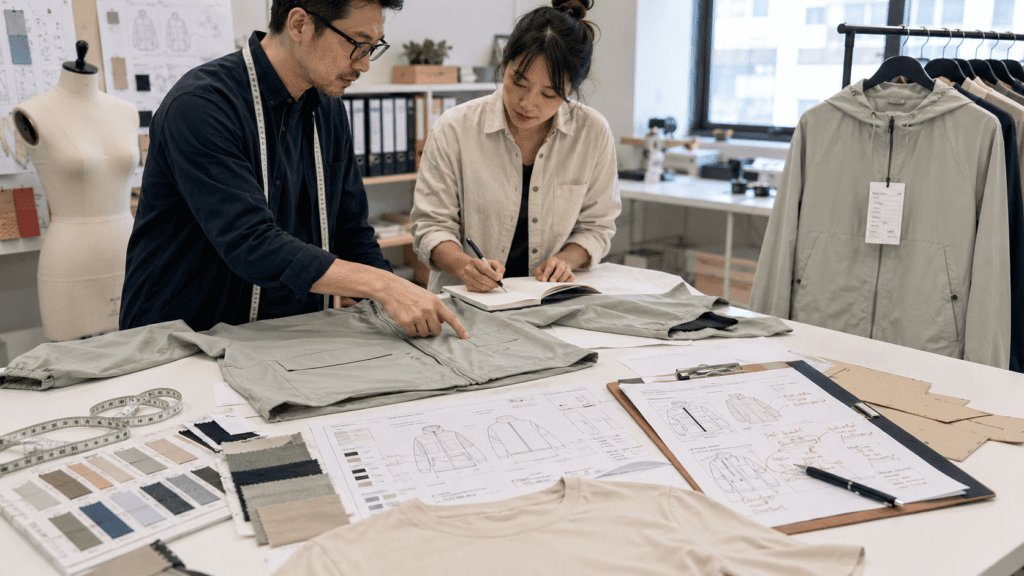
Sampling is not a single approval step. Depending on the product, it may include an initial development sample, fit revisions, a size set, color or material approvals, and a final pre-production sample.
Before development begins, the brand should confirm which samples are included in the quotation, how many revision rounds are expected, and whether material substitutions will be used during early testing. A sample made from available fabric may help evaluate construction, but it cannot fully confirm the fit, appearance, or performance of the final material.
Each revision should be documented rather than communicated only through calls or informal messages. Comments should identify the affected measurement, construction detail, material, color, trim, or finish. Updated specification sheets and dated sample records make it easier to distinguish approved changes from earlier versions.
The final pre-production sample should reflect the materials, construction, branding, and finishing intended for bulk production. If any component remains different, the supplier should state what will change and obtain written approval before production begins.
Brands should also decide who has authority to approve samples. Conflicting comments from different team members can delay development and create uncertainty about which version the factory should follow.
A structured sampling process may take longer at the beginning, but it reduces the risk of discovering unresolved fit or construction problems after materials have been cut and the production line is already running.
8. What Quality Checks Will Take Place?
Quality requirements should be defined before bulk production, not introduced after finished goods are inspected. The supplier needs a clear reference for acceptable construction, measurements, materials, colors, branding, finishing, and packaging.
An approved pre-production sample provides part of that reference, but written standards are also necessary. These may include measurement tolerances, stitch requirements, placement dimensions, color references, packaging instructions, testing requirements, and a list of defects that would make a product unacceptable.
Quality control can take place at several stages:
- checking materials and components before production;
- reviewing cutting and initial production output;
- inspecting garments while the order is in progress;
- verifying measurements, workmanship, and quantities after completion;
- confirming labels, packaging, cartons, and shipping marks before dispatch.
The appropriate inspection plan depends on the product, order size, technical complexity, and consequences of failure. A basic garment and a performance product with specialized construction may require different checks.
Brands should determine who will manage quality control and inspection at each stage and how the results will be documented. Factory quality-control teams can monitor daily production, while an independent inspector or manufacturing partner may provide additional verification before shipment.
An inspection report should do more than state that an order passed. It should identify the sample size, checks performed, defects found, measurements reviewed, photographs taken, and corrective actions required. If a recognized sampling method such as AQL is used, the inspection level and acceptable limits should be agreed in advance.
No inspection process can replace accurate specifications and proper production management. Its purpose is to confirm that the agreed standards have been followed and to identify problems before the goods leave the factory.
9. Can the Factory Support Your Schedule and Repeat Orders?
A supplier may have the technical ability to make the product but lack available capacity during the required production window. Factory capability and factory availability are separate questions, and both must be confirmed before the brand commits to a launch date.
Ask when materials can be secured, when sampling can begin, and when the production line can be reserved. A general statement about standard lead time is less useful than a schedule tied to specific milestones and approvals.
The production plan should account for:
- material sourcing and testing;
- sample development and revisions;
- final sample approval;
- production-line booking;
- cutting, sewing, and finishing;
- inspections and any required corrective action;
- packing and export preparation;
- freight and customs processing.
A delay in one stage can affect every activity that follows. Late approval of a fabric or sample, for example, may cause the factory to reassign the planned production slot to another order.
Capacity also matters after the first order. If demand increases, the brand needs to know whether the supplier can produce additional volume without changing the approved construction or transferring production to a facility the brand has not approved.
Repeatability should be discussed before the initial material order. Confirm whether fabrics, colors, trims, labels, patterns, and production records will remain available. The supplier should also explain how approved samples and specifications are stored and controlled between production runs.
A reliable repeat-order process allows the brand to replenish successful products without restarting development each time. It also reduces the risk of unexpected differences in fit, color, workmanship, or packaging.
10. What Will the Total Landed Cost Include?
A low manufacturing quotation does not always result in a low final cost. Brands should compare the total expense of producing and delivering the order, not only the price of sewing each garment.
The calculation may include:
- fabric, trims, labels, and packaging;
- pattern development and sample fees;
- testing and certification;
- printing, embroidery, washing, or specialized finishing;
- inspection and corrective work;
- inland transportation;
- export documentation;
- freight, insurance, and customs clearance;
- import duties, taxes, and brokerage charges;
- delivery to the warehouse or fulfillment partner.
Payment terms and delivery conditions also affect the comparison. EXW, FOB, and DDP quotations include different responsibilities and should not be evaluated as if they covered the same services.
Tariff treatment depends on the product classification, destination market, material origin, and applicable trade rules. Preferential access under a trade agreement may require specific documentation and rules of origin. Manufacturing or assembling a garment in Vietnam does not automatically guarantee that every tariff preference will apply.
Brands should therefore request a written breakdown that identifies what the quotation includes, what remains the buyer’s responsibility, and which costs may change before shipment.
The lowest unit price may become less attractive once material minimums, additional inspections, freight, duties, and delays are considered. A complete landed-cost estimate provides a more realistic basis for comparing Vietnam with other manufacturing locations.
When Vietnam May Be the Right Manufacturing Option
Clothing manufacturing in Vietnam may be a suitable option when the product requirements are clear, the planned volume is realistic, and the brand has enough time to coordinate materials, sampling, production, and international delivery.
The strongest fit usually exists when:
- the supplier has relevant experience with the product category;
- technical specifications and approval responsibilities are clearly defined;
- fabric and trim availability has been confirmed;
- the order meets the minimums of both the factory and material suppliers;
- quality standards are documented before production;
- the schedule includes time for sampling and possible revisions;
- the brand expects repeat orders or future increases in volume.
A different manufacturing location may be more practical when the brand needs an extremely small test run, immediate delivery, highly specialized materials that are not readily available, or extensive product development before sampling can begin.
Brands that are still deciding between regions can compare clothing manufacturing locations according to product type, MOQ, material access, quality requirements, and delivery needs.
This does not mean that Vietnam is unsuitable for new or growing brands. It means that the supplier and production model must be selected around the actual project rather than around general assumptions about the country.
The final decision should be based on product fit, material access, available capacity, quality management, logistics, and total landed cost.
How Fashion Atlas Group Helps Brands Evaluate Vietnamese Suppliers
Managing an international apparel order often requires coordination across several independent parties. A factory may handle cutting and sewing, while separate suppliers provide fabric, trims, printing, labels, packaging, inspections, or transportation.
At Fashion Atlas Group, we often coordinate several of these moving parts within the same production program. Depending on the project, that can include
- reviewing product requirements and production readiness;
- comparing suppliers based on relevant capabilities;
- coordinating communication and quotations;
- organizing materials and sample development;
- documenting approvals and production requirements;
- monitoring production progress;
- arranging quality inspections;
- preparing the order for international delivery.
Our role is not to present one country as the correct choice for every product. We help clients compare manufacturing locations and determine which supplier, production model, and sourcing region best match the order.
Final Considerations
Choosing a manufacturing location is not only a pricing decision. The right supplier must be able to understand the product, obtain the required materials, meet the agreed quality standards, support the production schedule, and prepare the order for its final destination.
Clothing manufacturing in Vietnam benefits from a large and well-established apparel production base, but results still depend on careful supplier selection and production planning. Brands should verify each partner individually and avoid relying on general claims about low costs, fast lead times, or universal capabilities.
Before requesting quotations, prepare your product specifications, target quantity, material requirements, delivery destination, and expected launch date. These details will make it easier to compare suppliers and decide whether manufacturing in Vietnam makes sense for the product.