
Launching your own clothing brand involves more than developing designs or finding customers. One of the most important decisions you’ll make early on is choosing the right manufacturing partner. The quality of your products, how quickly you can bring a collection to market, your ability to scale, and ultimately your brand’s reputation all depend heavily on that decision.
Today, private label clothing manufacturers offer a wide range of services, from simple cut-and-sew production to end-to-end support that includes product development, fabric sourcing, sample creation, quality control, branding, and supply chain management. Yet having more options does not necessarily make the decision easier. In fact, it has become increasingly difficult for startups and established brands alike to determine which manufacturer is genuinely the right fit for their needs.
Many manufacturer roundups are little more than lists of companies accompanied by brief descriptions. While these guides can help readers identify the major players in the market, they rarely answer the question that matters most: how do you choose the manufacturer that’s right for your brand?
That’s exactly why we created this guide.
Rather than trying to identify a single “best” manufacturer, we’ve taken a different approach, because there is no universal answer. A company that’s an excellent fit for an emerging fashion brand may not be the right choice for a large retailer, and a manufacturer that specializes in sportswear may not be the best partner for a premium casualwear label.
In this guide, we’ll explain why U.S. clothing manufacturing is becoming a strategic choice once again for many brands, clarify the differences between private label, OEM, and ODM production models, outline the services a modern manufacturing partner should provide, highlight common mistakes to avoid during the selection process, and explain the criteria we used to evaluate the companies featured in this review.
Our goal is not simply to help you find a manufacturer, but to help you choose a long-term partner that can support your brand as it grows.
Why Manufacturing Clothing in the U.S. Is Once Again Becoming a Strategic Choice for Fashion Brands
Over the past few years, the global apparel industry has undergone significant change. For many years, moving production to Asia was the obvious choice for most fashion brands. Today, however, an increasing number of companies are rethinking their supply chains and looking for ways to make them more resilient, flexible, and sustainable.
Several major events have accelerated this shift. The COVID-19 pandemic, disruptions to global logistics, rising freight costs, changes in trade policies, and longer shipping times exposed the risks of relying too heavily on a single manufacturing region. As a result, many brands have started exploring ways to move at least part of their production closer to their primary markets.
This shift has brought renewed attention to two manufacturing strategies: reshoring and nearshoring.
Reshoring means bringing production back to the United States, while nearshoring involves relocating manufacturing to neighboring countries or regions that are geographically closer to the target market. Both approaches help brands shorten lead times, respond more quickly to changing demand, and reduce the risks associated with global supply chains.
Brands are also rethinking how they manage inventory. Instead of placing large production orders months in advance, many now prefer smaller production runs, faster product testing, and more frequent collection updates. This approach reduces the risk of overproduction while helping brands react more quickly to changing consumer preferences.
Sustainability has become another major factor driving this trend. Today’s consumers are increasingly interested in where products are made, how workers are treated, whether environmental standards are met, and how transparent a company’s supply chain is. As a result, many brands actively seek manufacturing partners that can demonstrate compliance with recognized quality, social responsibility, and environmental standards.
At the same time, manufacturing in the United States is not the right solution for every business. Production costs are generally higher than in many Asian manufacturing markets. However, for many brands, those higher costs are offset by shorter lead times, easier communication, closer quality oversight, and the ability to bring new products to market much faster.
Ultimately, the question is no longer simply “Where is it cheapest to manufacture clothing?” Instead, brands are asking, “Which manufacturing strategy will help us grow faster, respond more effectively to market changes, and build a stronger business?”
That is why choosing the right manufacturing partner involves much more than comparing production costs. Reliability, production flexibility, communication, service quality, and long-term partnership potential have become just as important as price when making manufacturing decisions.
What You Need to Know Before Choosing a Clothing Manufacturer: Private Label, OEM & ODM
Before approaching a manufacturer, it is important to determine which production model is the best fit for your project. The terms Private Label, OEM and ODM are often used interchangeably, but they involve different levels of product readiness, brand involvement in development and control over the final result.
Choosing the wrong model can lead to unnecessary costs and delay the launch of your collection. For example, a brand with a finalized design and complete technical specifications does not always need ODM services, while a company with only a product idea may find it difficult to work with a factory that accepts only OEM projects supported by complete technical documentation.
Private Label
Under the Private Label model, products are manufactured under the customer’s brand name. The manufacturer adds branded labels, tags, logos, packaging and other branding elements.
However, the scope of these services can vary considerably. Some manufacturers offer ready-made styles that can be customized through changes to the color, fabric, or finishing details, while others handle the entire process, from product development and sampling to full-scale production.
Therefore, simply stating ‘we work with Private Label’ is not enough. A brand should clarify exactly what is included in the service and to what extent the finished product can be customized.
Best suited for: brands that prioritize producing clothing under their own brand name, but do not necessarily need to manage every stage of production themselves.
OEM: Manufacturing to the Customer’s Specifications
Under the OEM model, the brand provides the manufacturer with complete documentation: the design, technical specifications, size chart, and requirements for materials, construction and product finishing. The manufacturer’s task is to produce the goods in accordance with these specifications.
This model gives the brand a high level of control over the product, but requires thorough preparation. Incomplete technical specifications, conflicting dimensions or a lack of precise material requirements can lead to errors as early as the prototyping stage.
Best suited for: companies with their own team of designers and developers, ready-made patterns and a detailed technical package.
ODM: Products Based on the Manufacturer’s Existing Designs
In an ODM arrangement, the manufacturer offers an existing model or one of its own designs, which can be adapted to the client’s brand. It is usually possible to change the fabric, color, individual design elements, decoration and branding.
As the basis of the product has already been developed, ODM allows the product to be prepared for production more quickly and reduces development costs. At the same time, the brand has less freedom than when creating a completely original model under an OEM arrangement.
Best suited for: companies that need to launch a new product category quickly, test demand or expand their range without lengthy development from scratch.
How to Choose the Right Model
You should focus not on the name of the service, but on the stage of the project.
When a brand has only an idea, it will need a partner to develop the product, source materials and create prototypes.
If a complete technical package is already available, it makes more sense to choose an OEM manufacturer with experience in the relevant clothing category.
For a faster launch based on an existing design, the ODM model may be a better fit.
Private label production can be incorporated into any of these models when the finished products are manufactured under the client’s own brand.
In practice, the boundaries between these formats are often blurred. The same manufacturer may offer OEM, ODM and a comprehensive private label program. Therefore, before requesting a quote, it is essential to agree on who is responsible for the design, patterns, technical documentation, selection of materials, samples and any changes prior to mass production.
It is the allocation of responsibility, rather than the name of the production model, that determines how clear and manageable the project will be.
Which Services Matter Most When Choosing a Manufacturing Partner?
Many startup brands compare manufacturers based on production costs or minimum order quantities (MOQs). However, in practice, these factors are only part of the bigger picture. The success of a project depends largely on which tasks the manufacturer is prepared to take on and how deeply they are involved in product development.
The more stages of the production process a single partner is able to coordinate, the easier it is to manage the project, monitor quality and meet deadlines. That is precisely why, before choosing a company, it is worth paying attention not only to its production capacity but also to the range of services it offers.
Product Development
If a brand begins with only a concept for a future collection, the product development stage is where that concept is transformed into a finished product.
Depending on the manufacturer’s capabilities, this service may include:
- product design;
- pattern making;
- preparation of technical documentation;
- recommendations on sewing techniques;
- advice on the selection of materials and trimmings.
Why This Is Important
If the manufacturer does not provide such services, the brand will have to find a pattern-maker, production engineer and other specialists independently. This increases the cost of the project and complicates process management.
Fabric Sourcing
Even a successful design does not guarantee a high-quality result if the materials are chosen incorrectly.
An experienced manufacturing partner helps to select fabrics based on the product’s intended use, budget, care needs, weight, composition, and required durability. Where necessary, the manufacturer can suggest alternative materials that will reduce costs without any significant loss of quality.
What to Look Out For
If environmental responsibility is important to your brand, check in advance whether the manufacturer can work with certified materials, such as organic cotton, recycled fabrics or materials that meet international environmental standards.
Sample Production (Sampling)
Creating a sample is one of the most important stages in garment development.
It is at this stage that the garment’s fit, the quality of workmanship, measurement accuracy, sewing techniques and the appearance of the future product are checked.
Expert Advice
Do not treat the sample as a mere formality. Most changes to the garment’s design are made following the first fitting. It is far cheaper to refine a single sample than to correct mistakes after an entire production run has been completed.
Quality Control
Reliable manufacturers do not limit their quality control to just before the finished products are shipped.
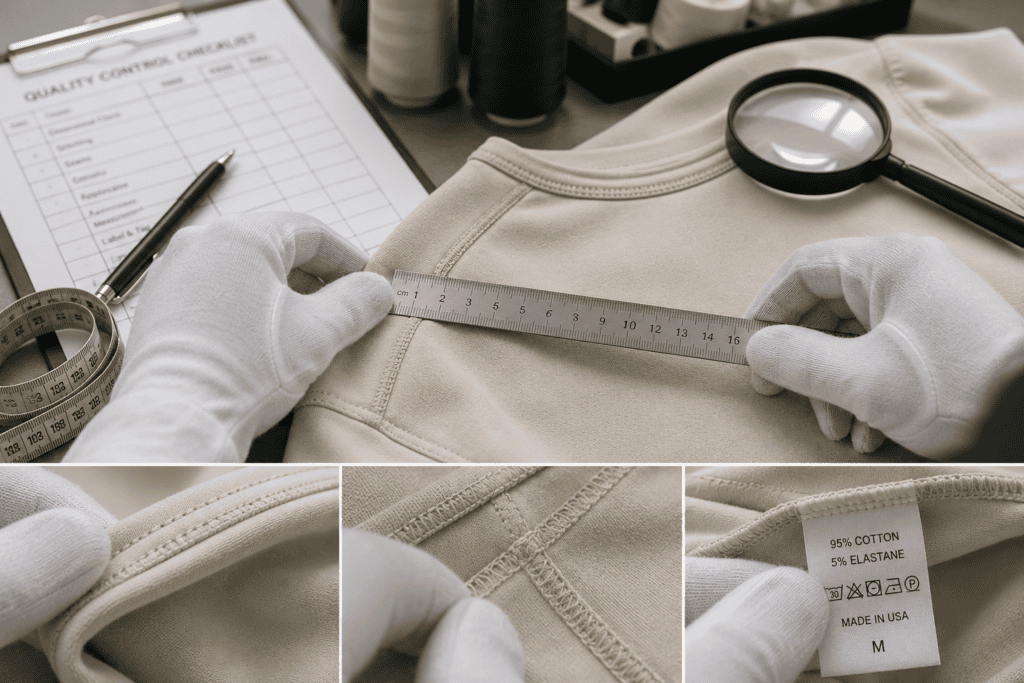
A professional quality control system includes checking materials on receipt, interim checks during production, and a final inspection before packaging and dispatch.
What to Ask the Manufacturer
Before entering into a partnership, clarify how quality control is organized:
- who carries out the checks;
- at which stages they are carried out;
- whether reports and photographs of the finished products are provided;
- how the company responds when defects are detected.
The answers to these questions allow you to understand in advance how seriously the manufacturer takes the quality of its products.
Branding and Private Label Services
For most brands, clothing production does not end with the sewing of garments.
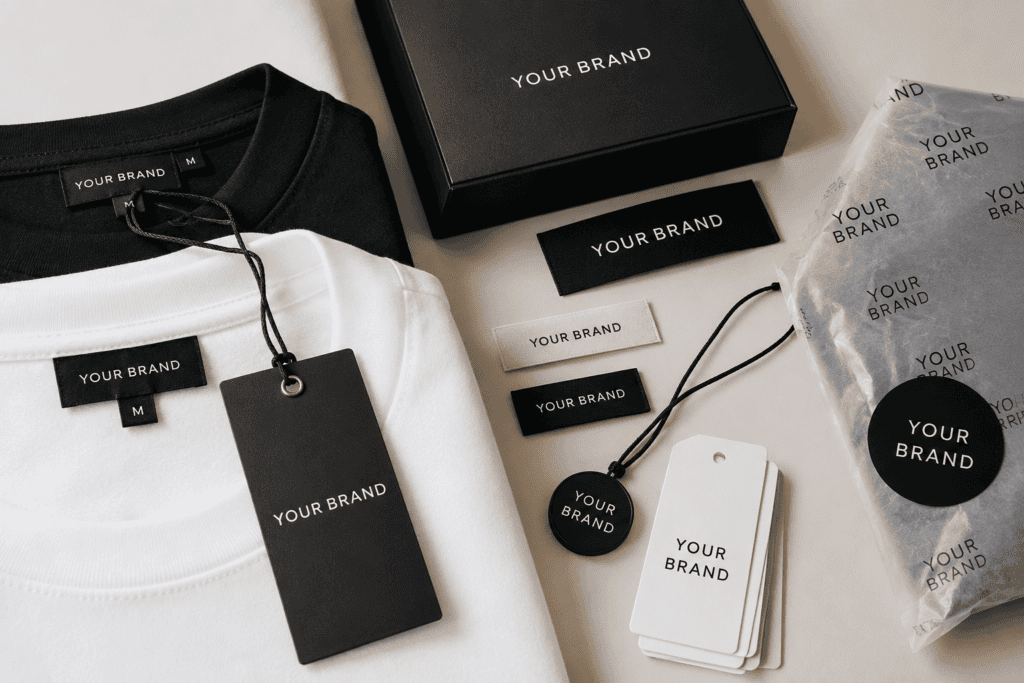
A modern manufacturing partner usually offers product branding services:
- custom label production;
- printing and embroidery of logos;
- packaging design;
- production of tags;
- application of branded design elements.
These details help strengthen brand recognition and give the final product a polished, professional appearance.
Production Management and Logistics
Once the prototype has been approved, the longest phase of the project begins: mass production.
In addition to manufacturing, many companies help source materials, monitor production timelines, coordinate packaging and international shipping, and manage communication across multiple production facilities.
For brands that do not have their own production team, this support makes project management considerably easier.
Scaling Capabilities
When choosing a manufacturer, many companies focus solely on the initial order. However, it is equally important to understand whether the chosen partner will be able to support the brand’s future growth.
If sales prove successful, production volumes may increase significantly. Therefore, it is worth discussing the following during the negotiation stage:
- potential growth in production volumes;
- lead times for large orders;
- available production capacity;
- experience of working with fast-growing brands.
The Key Thing to Remember
When choosing a manufacturing partner, do not focus solely on the cost of production or the minimum order quantity. It is far more important to understand what responsibilities the company is prepared to take on and whether it will be able to support your brand as it develops. In the long term, this level of support can play a major role in successfully launching and scaling a fashion brand.
Common Mistakes to Avoid When Choosing a Private Label Clothing Manufacturer
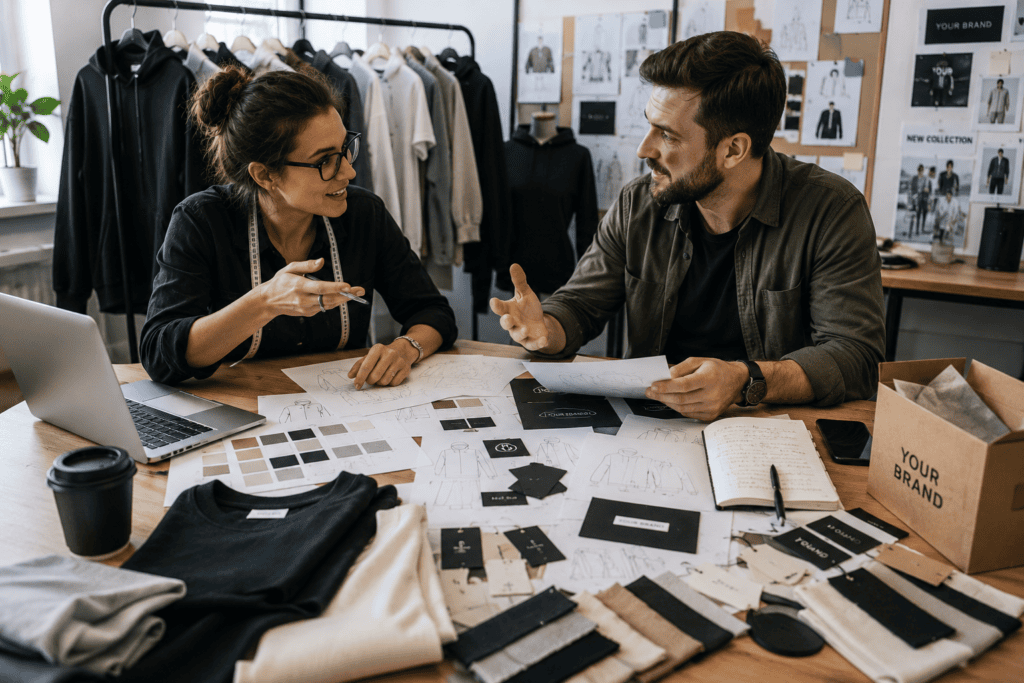
Choosing a manufacturer is one of the most important decisions involved in launching a clothing brand. However, most of the problems companies face during production arise much earlier — as early as the partner selection stage.
While analyzing manufacturers, industry resources and the requirements that brands most commonly set for production, we noticed a pattern: mistakes are rarely linked to any single factor. They are usually the result of hasty decisions, a lack of information or unrealistic expectations regarding the partnership.
Below, we have compiled a list of the most common mistakes, which can have a significant impact on deadlines, budgets and the quality of the finished products.
Mistake No. 1: Choosing a Manufacturer Based Solely on Price
The desire to cut costs is perfectly natural, especially for new brands. However, the lowest quote does not always offer the best overall value.
A low price may be due to the use of cheaper materials, limited quality control, a lack of product development services, or additional costs that arise once work has begun.
💡 Practical Tip
Don’t compare the cost per unit; instead, compare the total value of the services the brand receives. Sometimes, a higher price helps avoid significant costs associated with rectifying errors after production has started.
Mistake No. 2: Underestimating the Prototyping Stage
Some companies are keen to move on to mass production as quickly as possible, viewing the production of prototypes as a waste of time and money.
In practice, it is precisely during the prototyping phase that most problems come to light: poor fit, design flaws, unsuitable materials or failure to meet the brand’s expectations.
📌 In Practice
Experienced manufacturers rarely recommend starting mass production without full approval of the prototype. It is much easier and cheaper to revise a single sample than to rework an entire batch of finished products.
Mistake No. 3: Judging a Manufacturer Solely on the Basis of the MOQ
The minimum order quantity is an important indicator, but by no means the only one.
A manufacturer with a higher MOQ may offer higher-quality materials, consistent quality control, better scalability and a more favorable unit cost as production volumes increase.
✔ Key Points to Consider
First, determine the expected volume of your first collection and your brand development strategy. Only then should you compare the terms offered by different manufacturers.
Mistake No. 4: Failing to Discuss the Communication Process
Even an experienced manufacturer will be unable to successfully complete a project if there is no clear system of communication between the parties.
Before signing the contract, it is worth clarifying:
- who your point of contact will be;
- how often progress reports are provided;
- how changes are agreed upon;
- how long it usually takes to respond to inquiries.
Clear communication significantly reduces the number of errors and speeds up project delivery.
Mistake No. 5: Ignoring the Quality Control System
Some brands assume that quality control is automatically built into the production process. In practice, however, different companies’ approaches can vary significantly.
⚠️ What to Clarify in Advance
Before starting a partnership, be sure to ask:
- whether interim checks are carried out during production;
- whether a final inspection of the finished products is carried out;
- who is responsible for quality control;
- whether photographs or reports are provided before the order is shipped.
The more transparent this process is, the lower the likelihood of receiving products with manufacturing defects.
Mistake No. 6: Looking for a Manufacturer That Can Do Everything
There is no company that excels equally in all categories of clothing.
Some manufacturers specialize in sportswear, others in knitwear, while others have extensive experience in developing new collections or working with smaller brands.
That is precisely why you should first define the objectives of your own project, and only then look for a manufacturer with proven experience in the relevant product category.
Mistake No. 7: Failing to Consider Long-Term Partnership Potential
Many companies choose a manufacturer solely for their first batch of products. However, if the brand starts to grow rapidly, the chosen factory may not be prepared to increase production volumes or offer additional services.
💬 Expert Opinion
You can always switch manufacturers, but such a transition almost always involves additional costs, a loss of time and the need to rebuild all production processes from scratch. That is precisely why, when choosing a partner, it is worth assessing not only the company’s current capabilities but also its ability to support the brand’s future development.
Most of these mistakes can be avoided by discussing the key terms of the partnership in advance, asking the right questions, and ensuring that the manufacturer’s capabilities match your project’s needs.
That is why, in the next section, we will explain the criteria used to evaluate the companies included in this review and why we chose them specifically.
How We Assessed Manufacturers
Hundreds of companies in the U.S. and global apparel manufacturing markets offer private label services. However, not all of them are equally well-suited to emerging fashion brands, growing companies or large-scale commercial projects.
In preparing this review, we did not set out to identify a single ‘best’ manufacturer. Instead, our aim was to highlight companies with different production models and help readers understand in which situations each might be the most suitable partner.
When evaluating manufacturers, we took into account not only the information published on the companies’ official websites, but also the range of services offered, their production specialization, the level of project support, the flexibility of collaboration, and their ability to meet the needs of modern fashion brands.
The main evaluation criteria were as follows.
| Criterion | Why it matters |
| Product Development | Enables a brand to progress from an idea to a finished product |
| Sampling | Helps to check quality and refine the product before production begins |
| Private Label Support | Enables the production of goods under the brand’s own trade name |
| OEM / ODM Capabilities | Demonstrates the flexibility of the production model and the manufacturer’s level of involvement |
| Quality Control | One of the key factors in achieving consistent results |
| Flexibility in collaboration | The ability to handle different order volumes and accommodate the specific requirements of the project |
| Scalability | The ability to support the brand as it grows |
| Specialization | The manufacturer’s experience in specific categories of clothing |
It is important to note that we have not ranked the companies from best to worst. Each has its own area of specialization and caters to different categories of clients. A manufacturer that would be an excellent choice for a startup will not necessarily be the best solution for a major brand, and vice versa.
That is precisely why we recommend using this overview not as a traditional ranking, but as a practical guide to help you choose a manufacturing partner based on the objectives and specific features of your project.
An Overview of Private Label Clothing Manufacturers
Each company featured in this overview has its own specialization, experience and approach to managing production. Some manufacturers are better suited to launching a first collection, others are geared towards mass production, while others offer comprehensive project support — from product development to organizing international logistics.
We have deliberately not ranked the companies or labeled them as ‘better’ or ‘worse’. Instead, we have endeavoured to highlight each manufacturer’s strengths, draw attention to the distinctive features of their operations, and explain for which projects a partnership with them might prove most effective.
When describing the companies, we have followed a consistent structure to make it easier for you to compare manufacturers and choose a partner that best suits your brand’s specific needs.
Plucky Reach (Los Angeles, California, USA)
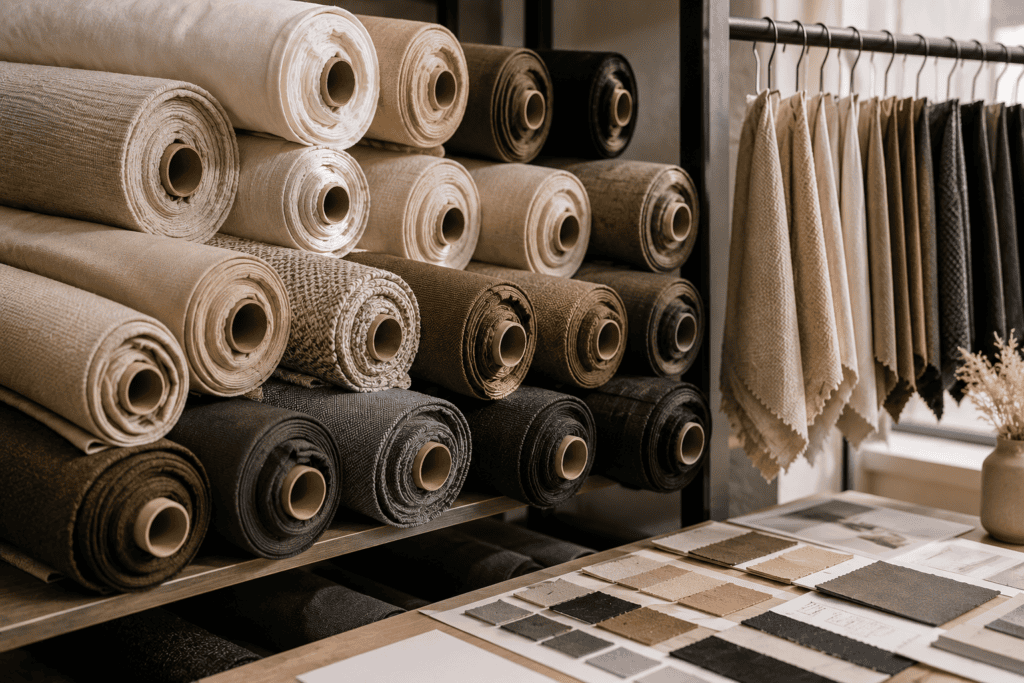
📍 Location: Los Angeles, California, USA
⭐ Ideal for: startups , independent designers, fashion entrepreneurs and brands that need not only a manufacturer but also comprehensive support when launching their business.
About the Company
Plucky Reach is a consulting and manufacturing company that has been operating in the heart of the LA Fashion District since 2005. Unlike many manufacturers, the company combines its own manufacturing capabilities with brand development services, helping clients every step of the way — from the initial idea and the creation of technical documentation right through to market launch. According to the company, it has helped bring over 1,000 fashion brands to market during its time in business.
One of Plucky Reach’s distinctive features is its network of trusted manufacturing partners in Los Angeles. The company states that it collaborates with more than 30 factories in the LA Fashion District, enabling it to select a production site tailored to the product category, budget and project timeline.
Key Services
Plucky Reach offers fashion brand consulting, product development, tech pack creation, sample production, fabric sourcing, cut-and-sew manufacturing, production management, branding, Shopify store development, and support through market launch.
When Plucky Reach Is a Good Choice
Plucky Reach may be of particular interest to entrepreneurs who are launching their own clothing brand and want support not only during the production phase, but also when building their business. By combining consulting, product development, and access to production facilities, the company provides an integrated solution that allows brands to work with fewer separate contractors and manage their projects more efficiently.
What to Keep in Mind
Plucky Reach focuses primarily on working with brands that require product development, business development and production management services. If a company requires only mass production based on existing technical documentation, it is worth discussing the format of the collaboration and the list of required services in advance.
Why We Included Plucky Reach in This Review
Plucky Reach deserves attention thanks to its combination of manufacturing expertise, fashion consulting, and an extensive network of manufacturing partners in Los Angeles. This approach makes the company an attractive choice for brands that need not just a manufacturer, but also a partner capable of supporting a project from concept to market launch.
Apparel Production Inc. (New Jersey, USA)
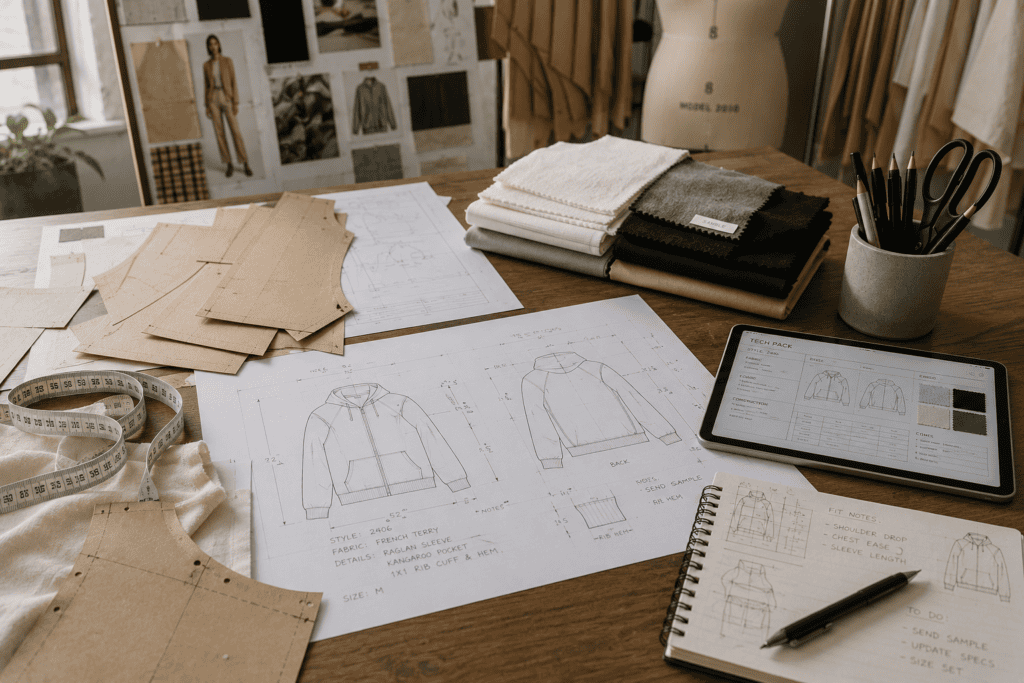
📍 Location: New Jersey, USA
⭐ Who it’s for: startups, up-and-coming fashion brands and companies that need help organising their production process, rather than just having clothes made.
About the Company
Apparel Production Inc. is an American company that focuses not only on clothing manufacturing but also on supporting projects at every stage of their implementation. In addition to producing finished goods, the company assists clients with product development, the preparation of technical documentation, the selection of materials and the organization of production.
This approach is particularly valuable for brands that do not have their own production team and require a partner capable of coordinating a project from concept through to the launch of mass production.
Key Services
The company offers services in product development, pattern making, fabric and trim sourcing, production management, quality control and project support. Thanks to this comprehensive approach, clients receive not only the finished product but also support at every stage of its creation.
When Apparel Production Inc. Is a Good Choice
The company is well suited to brands that are launching a new collection or manufacturing a collection for the first time. If a project requires the coordination of several stages — from product development to quality control of the finished batch — this form of collaboration makes it much easier to manage the production process.
What to Keep in Mind
Apparel Production Inc. places great emphasis on product development and project management. If a brand already has fully prepared technical documentation and is looking solely for manufacturing capacity for large production runs, it is worth discussing the terms of collaboration and the company’s production capabilities in advance.
Fashion Atlas Group
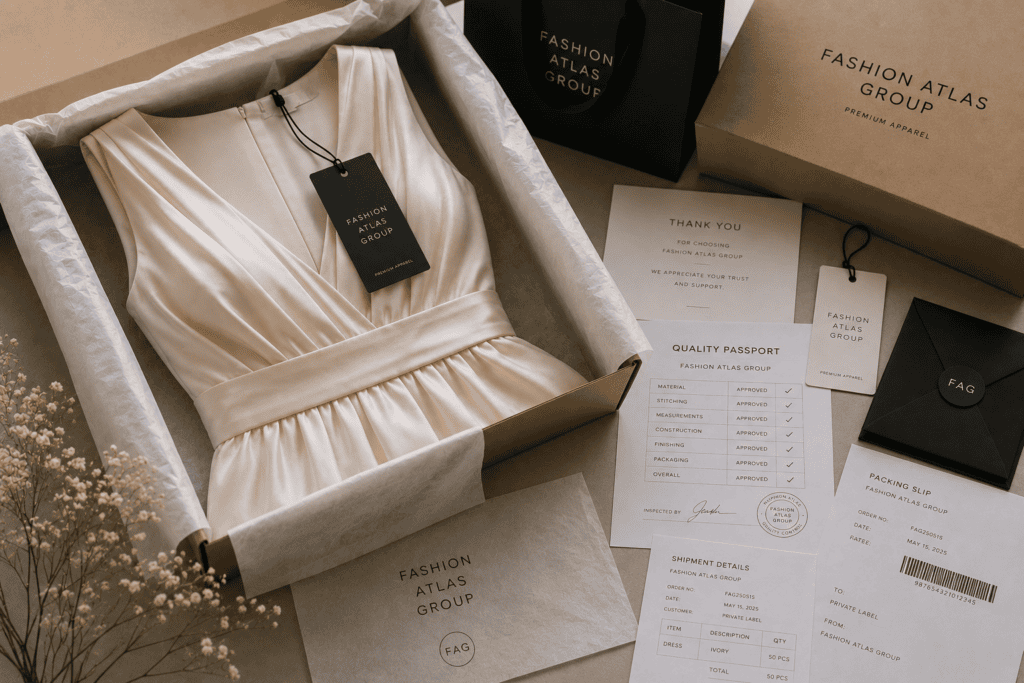
📍 Location: New Jersey, USA (international network of manufacturing partners)
⭐ Ideal for: startups, emerging fashion brands, retailers and companies requiring comprehensive manufacturing support.
About the Company
Fashion Atlas Group is not a traditional garment factory, but a manufacturing partner that helps brands organize the entire process of creating clothing — from product development to the production of finished goods. Rather than operating from a single production site, the company uses a network of trusted partners, selecting the optimal solution depending on the product category, order volume and the client’s requirements.
This approach allows for flexible production management and enables the company to identify the most suitable manufacturing facilities for different types of projects. In addition to the manufacturing itself, the company supports clients at every key stage – from product development and sample production to quality control, packaging and international logistics coordination.
Key Services
Fashion Atlas Group provides services covering product development, sourcing of materials and production facilities, sample production, organization of private label manufacturing, quality control, production coordination, packaging and logistics. This enables brands to work with a single partner rather than having to coordinate with multiple contractors.
When Fashion Atlas Group Is the Right Choice
The company is particularly well-suited to brands requiring comprehensive project support. This approach will be beneficial to entrepreneurs launching their first collection, companies developing multiple clothing categories, and brands planning to scale up production and seeking a long-term manufacturing partner.
What to Keep in Mind
Fashion Atlas Group operates through an international network of manufacturing partners; therefore, before entering into a partnership, it is advisable to discuss in advance the location of production, minimum order quantities, sample production lead times and the requirements for the specific project.
Why We Included the Company in This Review
We’ve included Fashion Atlas Group in this review because of its operating model, which differs from the traditional approach taken by most manufacturers. The company does not merely fulfill orders, but helps brands structure the entire production process, making it an attractive option for companies that need not only a manufacturer but also a business development partner.
Berunwear
📍 Location: China
⭐ Suitable for: sportswear and activewear brands, and companies planning to launch products under their own brand.
About the Company
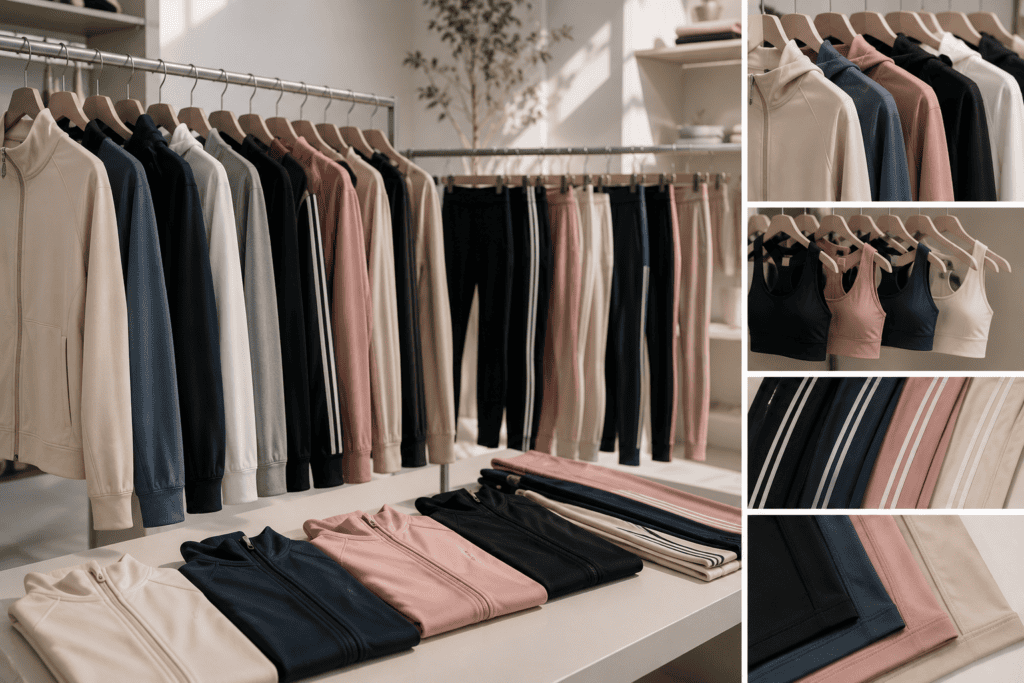
Berunwear specializes in the design and manufacture of sportswear under OEM, ODM and private label arrangements. The company works with international clients and offers solutions for brands producing clothing for fitness, team sports, running, cycling and everyday activewear.
According to information on its official website, Berunwear supports projects not only during the production stage but also during product development. The company offers assistance with design development, sample production, material selection and product branding.
Key Capabilities
Berunwear provides OEM and ODM manufacturing services, private label solutions, design development, sample production, fabric selection, product branding, packaging and logistics.
When Berunwear Is a Good Choice
Berunwear may be a good fit for sportswear brands looking for a manufacturer with experience in this product category. The company offers a comprehensive range of services, enabling it to support a project from product development through to the production of finished garments under the client’s own brand.
What to Keep in Mind
Berunwear specializes primarily in sportswear and activewear. If your brand works with other apparel categories, such as tailored apparel or designer clothing, it is worth confirming in advance whether the company has experience producing those types of garments.
Why We Included Berunwear in This Review
We included Berunwear in this review because of its specialization in activewear and the broad range of services it offers to brands developing their own sportswear collections. For companies operating specifically in this segment, this expertise can be a significant advantage.
Stitch Texas (Austin, Texas, USA)
📍 Location: Austin, Texas, USA
⭐ Best suited for: startups, independent designers, and emerging fashion brands seeking comprehensive support with collection development and launch.
About the Company
Stitch Texas is a U.S.-based company specializing in apparel development and manufacturing. Founded in 2014, it positions itself not only as a manufacturer but also as a product development partner, helping brands move from an initial concept to full-scale production. The company works extensively with startups and entrepreneurs who need professional guidance during the early stages of product development.
One of Stitch Texas’s distinguishing features is its comprehensive approach to client projects. Rather than offering only individual services, the company provides end-to-end support that may include consulting, pattern development, material sourcing, sample creation, and production management. Stitch Texas also offers fixed service packages, allowing brands to understand the scope of work and estimated project costs in advance.
Key Services
The company provides product development, pattern making, tech pack creation, sample development, fabric and material sourcing, and apparel manufacturing services. It also advises clients on brand development and preparing collections for launch. Stitch Texas works across a variety of product categories, including activewear, swimwear, children’s clothing, lingerie, accessories, and other sewn products.
When Stitch Texas Is a Good Choice
Stitch Texas may be a strong choice for brands that are still in the product development stage and want to work with a U.S.-based partner. By combining consulting and manufacturing services, the company helps brands reduce the number of contractors involved and manage the development process more efficiently. This approach is particularly valuable for entrepreneurs bringing their first collection to market.
What to Keep in Mind
Stitch Texas focuses primarily on product development and brand support. Before starting a project, it is important to discuss the required scope of services, production timelines, and collaboration process. If your project requires only full-scale production based on complete technical documentation, clarify which stages the company can handle and whether its service model is the right fit for your needs.
Why We Included Stitch Texas in This Review
We included Stitch Texas because it combines product development expertise, manufacturing capabilities, and a strong focus on the U.S. market. For brands seeking a partner that can guide a project from the initial concept through to production, Stitch Texas stands out as a noteworthy option among U.S. apparel development studios.
Comparison Table
| Company | Location | Best Suited For | Product Development | Private Label | OEM/ODM | Core Specialization |
| Plucky Reach | Los Angeles, USA | Startups and fashion entrepreneurs | Yes | Yes | Not listed as a primary production model | Fashion consulting, product development, and cut-and-sew manufacturing |
| Apparel Production Inc. | New Jersey, USA | Brands without an in-house production team | Yes | Yes | Confirm with the company | Product development and production management |
| Fashion Atlas Group | New Jersey, USA / international network | Brands seeking end-to-end production support | Yes | Yes | Yes | Sourcing, production coordination, and logistics |
| Berunwear | China | Activewear and sportswear brands | Yes | Yes | Yes | Sportswear and activewear |
| Stitch Texas | Austin, USA | Product development and collection launches | Yes | Confirm based on project requirements | Not listed as a primary production model | Apparel development, tech packs, and sampling |
Which Company Is the Right Fit for Your Brand?
After reviewing these manufacturers, the next logical question is: which company should you choose for your project? There is no one-size-fits-all answer. A manufacturer may be an excellent partner for an emerging brand but a poor fit for a company already producing at scale. When making your decision, it is important to consider not only production costs but also your project’s specific requirements, the manufacturer’s experience, and the level of support you need.
Below are several common scenarios faced by fashion brands.
If You Are Launching Your First Clothing Brand
During the early stages, most entrepreneurs need more than a manufacturer. They also need support with product development, technical documentation, and launch planning.
In this situation, Plucky Reach is worth considering. The company combines fashion consulting and product development with access to manufacturing facilities in the LA Fashion District, supporting projects from the initial concept through to market launch.
Stitch Texas may be another suitable option, particularly for brands that need a structured development process covering garment construction, pattern making, tech packs, and samples before moving into full-scale production.
If You Need an End-to-End Production Partner
Some brands prefer to work with a single company that can coordinate the entire production process — from sample development and manufacturing to quality control and logistics.
For these types of projects, Fashion Atlas Group may be a strong choice. The company supports clients at multiple stages of production and helps coordinate suppliers, manufacturing facilities, and other partners involved in the project.
If You Are Producing Sportswear
Sportswear production requires experience with performance fabrics, specialized construction techniques, and the specific technical requirements of each garment.
If your brand focuses primarily on activewear or apparel for fitness, running, or team sports, Berunwear is worth considering, as the company specializes in these product categories.
If You Need Help Developing a Collection in the United States
For brands that prefer to work with a U.S.-based partner during the product development stage, Stitch Texas may be a suitable choice.
The company assists with pattern making, tech pack creation, sample development, material sourcing, and preparing collections for production. This approach is particularly helpful for entrepreneurs who need structured support through each stage of development before placing a full production order.
If You Need Support Not Only with Production but Also with Launching a Fashion Business
Plucky Reach may be a strong fit for entrepreneurs who need support not only with apparel development but also with building their brand.
In addition to product development and production management, the company offers fashion consulting, guidance on brand positioning and project finances, brand launch support, and e-commerce services.
If You Need Help Managing the Production Process
Not every brand has an in-house team of garment technologists, pattern makers, and production specialists. In these cases, companies that can help structure and manage the entire product development and manufacturing process are particularly valuable.
Apparel Production Inc. focuses on supporting brands throughout the production process, assisting with product development, technical documentation, material sourcing, quality control, and production management.
If You Plan to Scale Your Brand
As your business grows, your requirements for a manufacturing partner will inevitably change. When choosing a company, consider whether it can support your project not only today but also several years from now.
In this situation, factors such as experience with long-term projects, production flexibility, available capacity, and the ability to increase output as your brand grows matter more than minimum order quantities or manufacturing costs alone.
Practical Tip
Do not look for the universally “best” manufacturer—it does not exist. What matters is finding a partner that meets your project’s current needs and can support its future growth.
Before making your final decision, request samples and discuss responsibilities, timelines, quality control procedures, additional service fees, and scaling options in detail. In most cases, aligned expectations and transparent processes provide the foundation for a successful long-term partnership.
Conclusion
Choosing a private label clothing manufacturer involves far more than finding a company capable of fulfilling an order. This decision affects product quality, collection launch timelines, your brand’s reputation, and your ability to scale in the future.
While preparing this review, one point became especially clear: there is no universally suitable manufacturer. Each company has its own specialization, experience, and operating model. Some help entrepreneurs move from an initial idea to their first collection. Others focus on product development or sportswear, while some provide comprehensive support covering production and logistics.
For this reason, production costs and minimum order quantities should not be the only factors guiding your decision. It is far more important to determine whether a company can deliver consistent quality, communicate clearly, maintain a transparent production process, and support your business as it grows.
Before signing an agreement, ask questions, request samples, and discuss quality control procedures, production timelines, responsibilities, and scaling capabilities. The more details you agree on at the outset, the less likely you are to encounter unexpected issues after the project begins.
This guide is intended not only to introduce you to different manufacturing partners but also to help you understand which criteria truly matter when choosing the right company for your brand. Whether you are launching your first collection or looking for a new partner for an established business, taking a thoughtful approach to manufacturer selection is one of the most important investments you can make in your brand’s future.
You can replace a manufacturer. Replacing a true production partner is far more difficult. That is why you should choose not the company offering the lowest price, but the team your brand can grow with over the long term.