
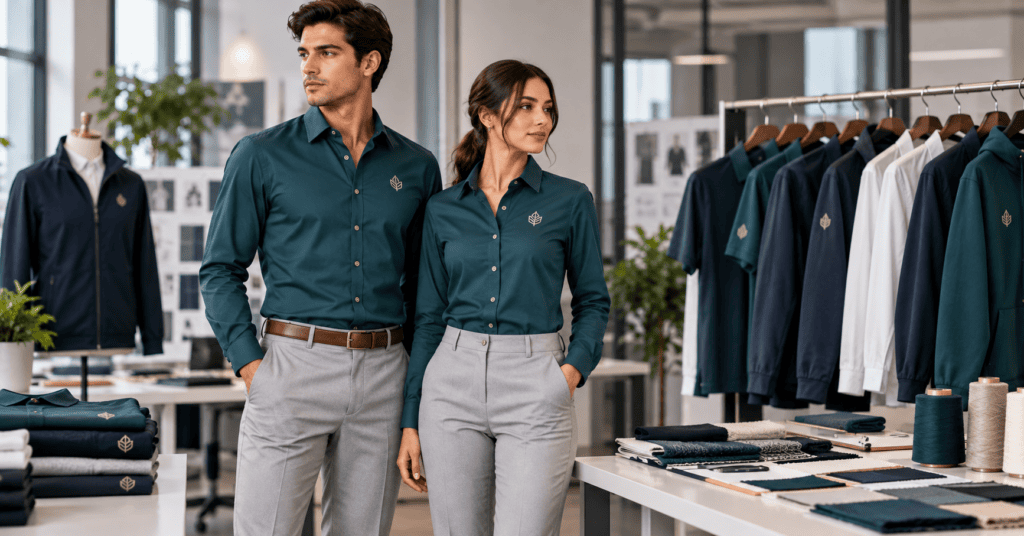
Custom corporate apparel can range from branded T-shirts for a small team to coordinated collections of polos, jackets, hoodies, and other garments used across an organization. Whatever the scale, creating apparel that people actually want to wear involves more than adding a company logo to an existing product. The garment itself, its fit, materials, branding, and intended use all shape the final result.
Those decisions become even more important when the same branding needs to work consistently across different garments. A logo that looks balanced on a polo may need different dimensions or placement on a T-shirt, while an embroidery treatment that works well on one fabric may not produce the same result on another. Small differences that seem insignificant during development can become much more noticeable when dozens or hundreds of pieces are produced.
A structured development process helps resolve these details before bulk production begins. Clear product requirements, appropriate materials and decoration methods, physical samples, and documented approvals give both the business and the manufacturer a defined standard to work toward.
Start With the Purpose of Your Corporate Apparel
Custom corporate apparel should be designed around how and where it will be used. Clothing worn every day by warehouse or field employees has different requirements from apparel created for an office team, trade show, company event, or customer-facing staff. Those differences influence the garment type, fabric weight, fit, decoration method, and other practical decisions made during development.
For everyday workwear, comfort and durability may take priority. Polos and T-shirts for customer-facing employees may call for a cleaner, more consistent appearance, while jackets or hoodies intended for outdoor use require greater attention to fabric performance and construction. Promotional apparel may place more emphasis on visual impact, particularly when the garments are designed for a specific campaign or event.
Another important distinction is whether the apparel is being produced for a one-time need or as part of an ongoing corporate program. Repeat orders make consistency in colors, sizing, materials, and branded details more important from the beginning. Defining the purpose early gives the development team a clearer direction before sampling starts.
Build a Clear Product Brief Before Sampling
A clear product brief turns a general request such as “we need branded polos” into something a manufacturer can actually develop. At this stage, the business needs to establish the garment types, expected quantities, size range, preferred fit, colors, branding requirements, and how the apparel will be used. Reference garments, measurements, artwork files, and photos can provide additional direction when particular details need to be matched closely.
The brief should also distinguish between fixed requirements and areas where the manufacturer has some flexibility. A company might require an exact logo size and placement while remaining open to several fabric options within a certain weight or composition. In other projects, matching an existing garment may be the priority, making its measurements, construction, and material characteristics more important from the outset.
With those decisions documented, sampling becomes much more useful. The first prototype is based on defined requirements rather than assumptions, and both sides have the same reference point when reviewing changes and deciding what needs to be approved before production.
Choose the Right Garment and Fabric
Garment and fabric selection should come before final decisions about logo placement and decoration. T-shirts, polos, hoodies, jackets, and other corporate pieces behave differently in production, so the same branding approach will not necessarily work equally well across an entire collection. Fabric weight, stretch, surface texture, construction, and intended use can all influence the finished result.
Material choice also needs to balance appearance with practical performance. Lightweight fabrics may work well for indoor teams or warm-weather events, while employees working outdoors may need heavier materials or additional layers. For garments that will be worn regularly, it is also worth considering how the fabric responds to repeated washing, movement, and everyday wear rather than judging it only from a photograph or swatch.
Decoration is part of that decision as well. Embroidery can create a polished, dimensional finish, but its weight and stitch density need to suit the fabric underneath. Printing may work better for larger graphics or certain lightweight garments. Considering the garment, material, and decoration together reduces the risk of choosing elements that work well separately but poorly in combination.
Define Fit and Sizing Before Production
Fit can easily become secondary when colors and branding receive most of the attention. But employees may wear the same garments for an entire workday, making comfort, freedom of movement, and predictable sizing just as important as appearance. A polished shirt is of little value if it feels restrictive or fits inconsistently across the size range.
Different garments also require different approaches to fit. A structured polo for customer-facing staff may need a different silhouette from a hoodie designed for a more casual team environment. When a corporate collection includes several garment types, each style should be evaluated on its own rather than assuming that the same proportions will work across T-shirts, polos, jackets, and other pieces.
Before bulk production, review the size chart together with the actual garment measurements. Chest width, body length, sleeve length, shoulder width, and other relevant points provide a more reliable production reference than size labels alone. Depending on the project, sampling key sizes can also reveal proportion or construction issues that are difficult to identify from a measurement chart.
Once the fit is approved, the final measurements become part of the product standard used for production. This gives the manufacturer a clear reference for maintaining consistent sizing across the order.
Plan Logo Placement and Decoration Carefully
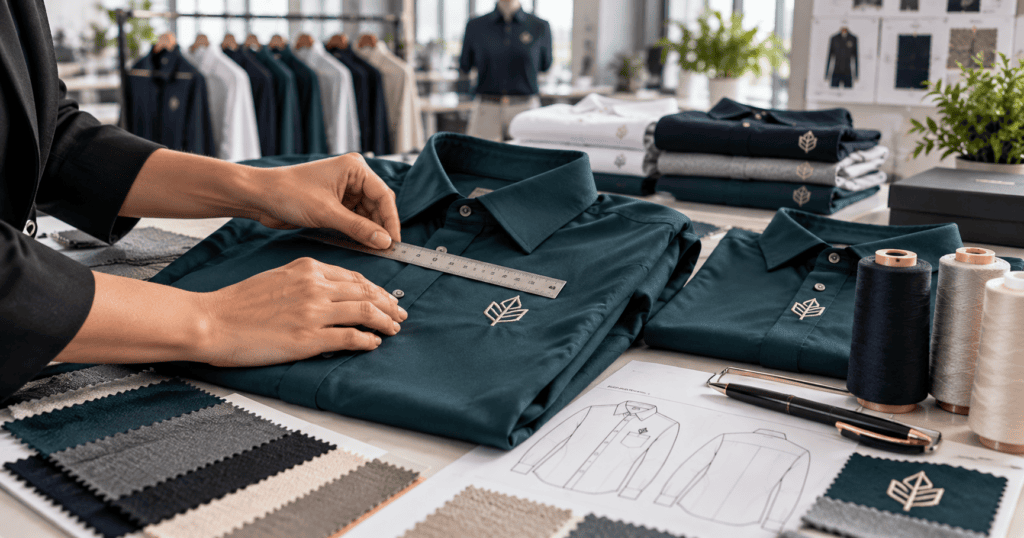
A company logo may be the most recognizable element of corporate apparel, but reproducing it accurately on fabric requires more than supplying an artwork file. Size, position, color, and the relationship between individual design elements all need to work with the garment and the chosen decoration method. Even small differences in spacing or alignment can noticeably change familiar branding.
Logo placement is best evaluated on the actual garment rather than on a digital mockup alone. A design that appears correctly proportioned on screen may look too large, too small, or slightly off-center once applied to a polo or T-shirt. Seams, plackets, pockets, collars, and the natural shape of the garment can all affect how the finished branding appears.
One Fashion Atlas Group project illustrates the level of detail involved. During the development of apparel featuring an FFI logo, sample review led to adjustments in the logo dimensions, stripe alignment, and an additional stripe within the design. These were small changes individually, but each affected how closely the finished branding matched the approved artwork.
For production, details like these need to be measurable rather than left to visual interpretation. Final artwork, dimensions, placement measurements, and confirmed decoration details give the manufacturer a much clearer standard to reproduce across the order.
Use Sampling to Resolve Details Before Bulk Production
Sampling is where decisions about custom corporate apparel are tested on a physical garment. It gives the business an opportunity to see how the fit, materials, construction, and branding work together before committing to the full order. Details that appear correct in artwork, measurements, or digital mockups can look or behave differently once they become part of an actual product.
A useful sample review goes beyond deciding whether the garment simply “looks good.” Compare it with the agreed measurements, artwork, placement instructions, colors, and reference materials, and note any changes that need to be made before approval. This creates a clear correction process rather than relying on general visual feedback.
The FFI project is a good example. After the first sample revealed several branding details that needed adjustment, a second sample was produced with the requested changes. Reviewing that version before approving the 115-piece order allowed the revised logo details to be checked on the garment rather than leaving those corrections to bulk production.
Once approved, the sample establishes the physical version of the garment that production is expected to reproduce. Finalized measurements, artwork, materials, and other documented requirements support that standard as the project moves into manufacturing.
Prepare Clear Specifications for Bulk Production
Sample approval is only the beginning of production preparation. Before manufacturing starts, every decision made during development needs to be reflected in a final set of instructions that the production team can follow across the entire order.
Depending on the product, this may include garment measurements and size grading, fabric and color references, logo dimensions and placement, decoration methods, trims, labels, packaging requirements, and quantities by size. Any changes approved during sampling should be incorporated into these documents rather than left scattered across emails, messages, or earlier versions of the brief.
Corporate apparel programs often include several garment types, which makes accurate documentation even more important. Polos, T-shirts, hoodies, and jackets may share the same visual identity while requiring different measurements, construction details, or decoration settings. Capturing those differences clearly helps maintain consistency across the collection.
Before production begins, every approved detail should have a clear reference. An approved sample serves as the physical benchmark, while the final documentation provides the technical information needed to reproduce it across different sizes and quantities.
Maintain Consistency During Production
Once bulk production begins, the priority shifts from developing the garment to reproducing the approved version consistently across the order. Materials, measurements, branding, trims, and construction details need to remain aligned with the agreed standard as production moves forward.
Branding deserves particular attention because small variations can become noticeable across a larger quantity of garments. Logo dimensions and placement should remain consistent, while embroidery or printing needs to follow the approved artwork and decoration settings. Fit and construction also need to stay within the agreed measurements across the size range.
Production checks help identify deviations while there is still an opportunity to correct them. Depending on the garment and manufacturing process, this may involve reviewing measurements, decoration, construction, or other critical details before the entire order is completed. Final inspection then confirms that the finished apparel meets the approved requirements before it moves to packing and shipment.
Packaging is part of that preparation as well. Size identification, individual packaging, carton organization, and required labels should be confirmed before shipment so the order arrives ready for distribution or use.
Corporate Apparel Production Brief: What to Define Before Sampling
Before sampling begins, bring the key product requirements together in one working brief. It does not need to be complicated, but it should give the manufacturer enough information to develop the first sample accurately and flag any unresolved questions early.
A practical corporate apparel brief can include:
- Garment type and purpose: T-shirt, polo, hoodie, jacket, workwear, or another style, along with where and how it will be worn.
- Fabric requirements: preferred composition, weight, stretch, texture, performance needs, and color references.
- Fit and sizing: intended fit, size range, measurement chart, grading requirements, and any reference garments.
- Branding: logo artwork, dimensions, placement, colors, decoration method, and any special design details.
- Construction details: collars, cuffs, pockets, closures, seams, trims, or other features that require specific execution.
- Labels and packaging: brand, size, and care labels, individual packaging, barcodes, and carton requirements when applicable.
- Order quantities: estimated total quantity and size breakdown, including whether future reorders are expected.
- Sample approval points: the details that need to be checked, corrected, and approved before bulk production.
As the product develops, the brief should be updated to reflect approved changes. A revised logo size, fit adjustment, fabric substitution, or construction change should not remain only in an email or message. Recording those decisions in the current version of the brief helps keep development and production aligned.
Plan for Future Reorders
Custom corporate apparel is often reordered as teams grow, new employees join, or existing garments need replacement. Planning for repeat production from the first order can make that process much easier than trying to reconstruct the product months later from photographs, emails, or incomplete records.
Keep the final production documents and approved artwork together, and retain a physical sample when possible. These references give the manufacturer a reliable baseline for reproducing the garment without rebuilding its specifications from scratch.
Material availability still needs to be reconfirmed before each new production run. Fabrics, trims, thread colors, and other components can change or become unavailable over time, particularly when orders are separated by long intervals. When consistency matters, any necessary substitutions should be reviewed and approved before production begins.
With a reliable product record in place, a reorder becomes less about developing the garment again and more about confirming what has changed. Quantities, size breakdowns, materials, or other requirements can then be updated while the approved product standard remains the starting point.
FAQ
What is custom corporate apparel?
Custom corporate apparel is clothing created or customized for a company, organization, or team. It can include T-shirts, polos, hoodies, jackets, workwear, and other garments featuring company logos, colors, labels, or other branded details. Depending on the project, a business may customize an existing garment or develop apparel to its own specifications.
Is embroidery or printing better for corporate apparel?
Neither method is automatically better. The right choice depends on the garment, fabric, artwork, and desired appearance. Embroidery is often suitable for polos, jackets, and smaller logos, while printing can work well for larger graphics and many T-shirt applications.
Should you order a sample before bulk production?
For custom corporate apparel, sampling allows the garment to be evaluated before the full order is produced. It provides an opportunity to check fit, measurements, materials, branding, and construction and to make necessary corrections before bulk production begins.
What information does a corporate apparel manufacturer need?
Manufacturers typically need the garment type, quantity, size range, fit requirements, fabric and color preferences, branding details, and any special construction requirements. Measurement charts, artwork files, reference garments, and packaging or labeling instructions may also be required depending on the project.
Can corporate apparel be reordered later?
Yes. Reorders are easier when the original garment has been properly documented and an approved sample is available for reference. Material and trim availability should still be reconfirmed before a new production run, especially when significant time has passed.
Final Thoughts
Successful custom corporate apparel starts with treating the garment as a product, not simply as a place for a company logo. When its purpose, fit, materials, branding, and production requirements are defined early, there is much less room for uncertainty as the project moves from sampling into bulk production.
A well-developed product also creates a stronger foundation for future orders. Instead of rebuilding the garment from scratch, businesses can return to an established standard and make changes only where they are actually needed.
Fashion Atlas Group supports businesses throughout the corporate apparel development and manufacturing process, from material sourcing and sampling to production, quality control, and logistics. For companies developing custom apparel for their teams, events, or ongoing programs, this approach helps keep product requirements coordinated from development through delivery.