
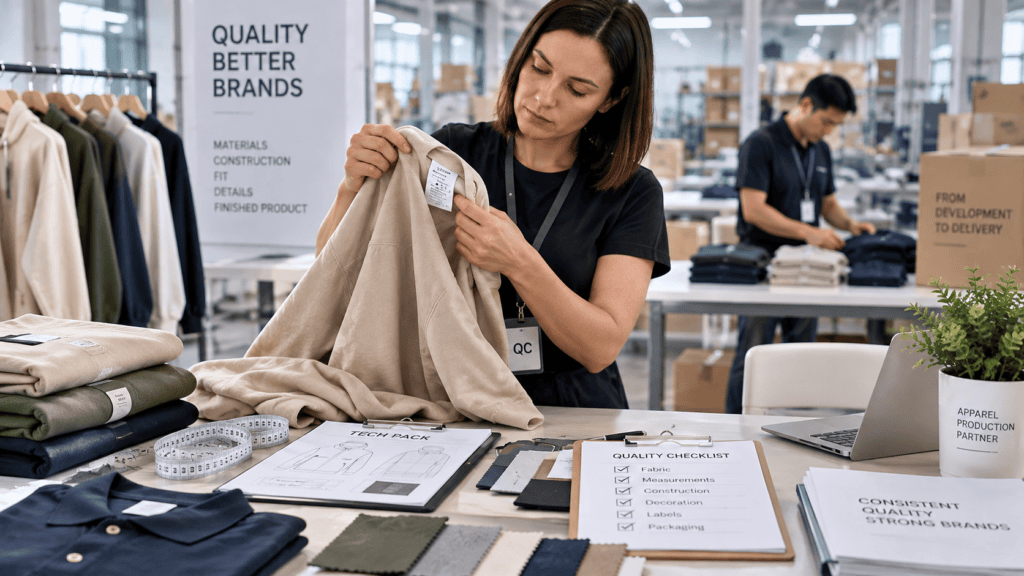
Quality control in clothing manufacturing should begin long before finished garments are packed into cartons. Fabric, measurements, construction, decoration, labels, and packaging all influence whether the final product matches what a brand originally approved. Many problems are also easier to address while a garment is still being developed or produced.
Waiting until the final inspection creates an obvious limitation. By then, fabric may already be cut, printing or embroidery completed, and hundreds of garments assembled. A problem can still be identified, but correcting it may require rework, replacement production, or additional time that was never built into the schedule.
A more effective approach is to create checkpoints throughout the manufacturing process. Sampling establishes the product standard, pre-production checks confirm that the right materials and specifications are ready, inline inspections monitor how consistently those requirements are being followed, and final checks evaluate the completed order before shipment. Each stage has a different purpose, and together they provide a much clearer picture of product quality.
Quality Control Starts With a Defined Product Standard
Without a clear product standard, a garment cannot be evaluated effectively. Before production begins, the brand and manufacturer should agree on the key requirements, including measurements, materials, colors, construction details, trims, decoration, labels, and other elements that are important to the design.
The approved sample often becomes one of the most valuable references because it shows how those individual requirements come together in a physical garment. Technical specifications and measurements remain essential, but a sample can capture characteristics such as hand feel, proportions, placement, and overall appearance that may be difficult to communicate through numbers alone.
Changes made during sampling should also be incorporated into the final production documents. If the fabric, measurements, logo placement, trim, or construction changes while the factory still has an earlier version of the specifications, conflicting instructions can easily enter production. Keeping the documentation aligned with the approved sample gives both the production and quality control teams the same benchmark to work from.
Sample Quality Control: Evaluate More Than Defects
Sample quality control goes beyond looking for visible defects. This is also the point where a brand can evaluate whether the chosen materials, construction, fit, decoration, and overall appearance actually create the product it intended to develop. A sample may be technically well made and still not deliver the right feel, performance, or visual result.
Different material options can also involve trade-offs. One fabric may reproduce a print more vividly, while another provides greater softness, warmth, or texture. Rather than judging a single characteristic in isolation, the sample should be evaluated according to the priorities established for the finished garment.
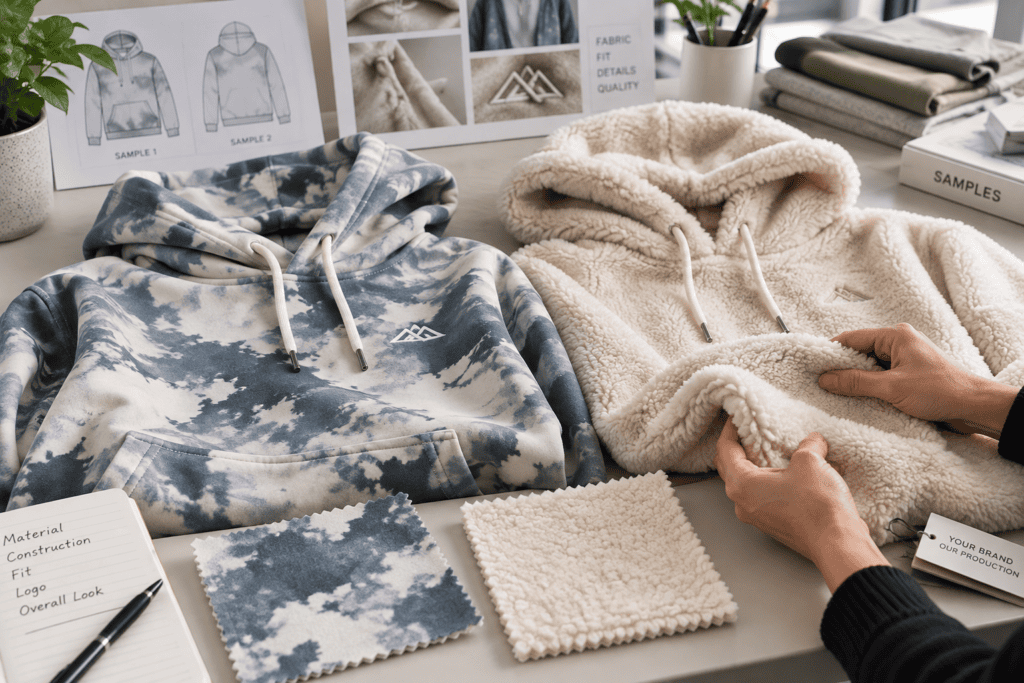
A Fashion Atlas Group fleece hoodie project illustrates this well. Two samples produced noticeably different results: one had a brighter appearance, while the other used a softer, fluffier high-pile fleece that also felt warmer. After comparing the two versions, the client selected the fluffier option because warmth and overall feel were more important for this particular product.
Beyond the fabric itself, the hoodie included an all-over print, a separate embroidered logo, and an oversized fit. Reviewing these elements together made it possible to evaluate the sample as a complete product rather than approving individual details separately. The selected version could then serve as a clearer reference for the intended garment moving forward.
Pre-Production Quality Control: Confirm What Will Enter Production
Once the sample is approved, quality control in clothing manufacturing shifts toward the materials and specifications that will actually be used for bulk production. Before cutting and assembly begin, the production team should verify that these inputs match the version of the product that received final approval.
Fabric is one of the most important elements to review. Composition, weight, texture, stretch, color, print, and other relevant characteristics should correspond to the agreed standard. Trims, thread, labels, hardware, and decoration materials also need to be checked when they affect the finished garment.
Production documents require the same level of attention. Measurements, size grading, construction instructions, artwork, placement specifications, and changes made during sampling should all reflect the final version. Earlier drafts should no longer serve as active references once newer requirements have been approved.
Catching discrepancies at this stage is far more useful than discovering them after manufacturing is underway. Verifying the materials and instructions before production begins reduces the risk of preventable differences being repeated across the order and gives the following quality checks a reliable starting point.
Inline Quality Control: Check the Product While It Is Being Made
Once bulk production is underway, the focus changes from verifying inputs to monitoring execution. Inline quality control checks whether the approved requirements are being followed consistently while garments are still moving through manufacturing, rather than waiting until the entire order is finished.
Measurements and construction are usually among the main areas to review, although the exact checks depend on the product. Seam quality, stitching, garment proportions, pocket placement, closures, and other structural details can be compared with the approved sample and specifications. For printed or embroidered garments, logo dimensions, placement, alignment, and the appearance of the decoration on the actual fabric may also need attention.
Consistency across the production run is especially important. One correctly made garment does not show whether the same measurements, construction, or branded details are being reproduced across dozens or hundreds of pieces. Reviewing garments at different points in production can help reveal whether an issue is isolated or beginning to repeat.
Finding a recurring problem while manufacturing is still in progress leaves more room to respond. If a construction detail is being assembled incorrectly, for example, the process may be corrected before the remaining garments reach the same operation. Once the full order is complete, that same issue can require much more extensive rework.
Final Inspection: Compare Finished Garments With the Approved Standard

By the time final inspection begins, production is substantially complete. The focus is no longer on developing or adjusting the product, but on determining whether the finished garments meet the requirements established during sampling and production preparation.
Finished pieces can be reviewed for measurements, construction, stitching, fabric appearance, color, decoration, trims, labels, and overall workmanship. Functional details such as zippers, buttons, snaps, drawstrings, or other closures should also be tested when they are part of the design. Printed and embroidered elements can be compared with the approved artwork for size, placement, alignment, and appearance.
Consistency across the order matters here as well. Inspecting multiple garments and sizes can reveal recurring workmanship issues, measurement variations, or differences in decoration that may not be visible when looking at a single piece. The goal is to evaluate whether the production run as a whole remains within the approved standard.
Final inspection provides an important last check on the finished product, but it cannot replace the controls that came earlier. Fabric has already been cut, decoration applied, and garments assembled, so some problems may now require rework or replacement rather than a simple production adjustment. Earlier checkpoints reduce the chance that those issues will first appear when most of the manufacturing work has already been completed.
Pre-Shipment Quality Control: Check More Than the Garment
A finished garment is only one part of a shipment-ready order. Before the goods leave the factory, the brand should also confirm that products are labeled, packed, counted, and organized according to the agreed requirements. Mistakes at this stage may not affect the garment itself, but they can still create problems when the order reaches a warehouse, retailer, or fulfillment operation.
Labels need to contain the correct information and be applied as specified, including size, composition, care instructions, and branding where required. Packaging elements such as hang tags, polybags, barcodes, and carton markings should also match the order requirements. When multiple styles, colors, or size ranges are shipped together, clear identification becomes particularly important.
Quantity and assortment checks are another part of shipment preparation. Packed units should match the approved size and color breakdown, and cartons should be organized so the receiving team can identify their contents. Any garments that have been rejected or set aside for replacement should remain separate from approved units.
Pre-shipment control closes the gap between a finished product and an order that is actually ready to leave the factory. It confirms that the garments have not only passed the required quality checks but are also prepared correctly for the next stage of the supply chain.
Quality Control Checkpoints Throughout Clothing Production
Quality control in clothing manufacturing becomes easier to manage when each stage of production has a defined purpose. Assigning the right checks to the right stage makes it easier to catch problems when they can still be addressed and prevents final inspection from carrying the entire responsibility for quality control.
| Stage | What to Check | Main Purpose |
| Sample | Fabric, fit, measurements, construction, decoration, trims, overall appearance | Establish the product standard and resolve development decisions |
| Pre-Production | Materials, colors, size specifications, artwork, labels, trims, final instructions | Verify that the correct inputs are ready for production |
| Inline | Measurements, stitching, construction, placement, decoration, consistency | Identify recurring issues while the production process can still be adjusted |
| Final | Finished measurements, workmanship, appearance, decoration, trims, labels, functionality | Evaluate completed garments against the approved standard |
| Pre-Shipment | Quantities, size and color breakdowns, packaging, barcodes, carton markings, rejected units | Confirm that the order is correctly prepared for shipment |
No single checkpoint can replace the others. Together, these stages create a quality control process that follows the product from development through manufacturing and shipment preparation.
Define Quality Requirements Before Production Begins
Quality does not mean exactly the same thing for every garment. A premium knit piece, printed fleece hoodie, lightweight activewear product, and basic promotional T-shirt may require very different priorities during inspection. The criteria should reflect the design, materials, intended use, price positioning, and construction of the specific product.
Some requirements can be defined objectively. Garment measurements can have established tolerances, logo placement can be measured, colors can be compared with approved references, and required trims or labels can be documented. Characteristics such as hand feel, surface texture, print appearance, or the overall balance of a garment may depend more heavily on comparison with an approved physical sample.
Brands also need to distinguish between critical requirements and details where reasonable variation may be acceptable. If a particular measurement, color, logo position, or construction feature is essential to the product, that requirement should be identified before production begins. Otherwise, expectations that seemed obvious during development can become difficult to evaluate once the garments have already been made.
Combining measurable specifications with approved physical references creates a more practical QC standard. Production and inspection teams can then evaluate the garment against defined requirements instead of relying on a subjective impression of whether it simply looks “good enough.”
Keep Quality Control Records for Future Orders
Quality control records remain valuable long after an order has shipped. Inspection notes, approved measurements, sample comments, photographs, material references, and documented corrections create a record of what was accepted and what required adjustment during production.
For repeat orders, that history provides a practical starting point. Instead of reconstructing previous decisions from memory, the brand and manufacturer can review what was produced, which standards were approved, and where problems appeared. Any changes in materials, suppliers, or production conditions can then be evaluated against an established reference.
Recurring issues can also reveal where the underlying process needs attention. If the same measurement, decoration detail, or construction problem appears across multiple production runs, repeatedly correcting finished garments may not address the real cause. The specification, production method, or control point may need to be revised instead.
Over time, this documentation turns quality control into more than a pass-or-fail decision on a single order. It creates a production history that can support greater consistency as products are reordered, modified, or expanded into additional styles.
FAQ
What is quality control in clothing manufacturing?
Quality control in clothing manufacturing is the process of checking materials, garments, and production against defined product requirements. It can cover multiple stages, from sampling and pre-production preparation to manufacturing, final inspection, and shipment readiness. The purpose is to identify inconsistencies and verify that finished products meet the approved standard.
When should quality control begin?
Quality control should begin during product development, not after bulk production is complete. Sampling establishes the initial product standard, while pre-production and inline checks provide opportunities to identify problems before they affect the entire order. Final and pre-shipment inspections then evaluate the completed products and their readiness for delivery.
What should be checked during a garment inspection?
The exact criteria depend on the product, but common checks include measurements, fabric appearance, stitching, construction, fit, prints or embroidery, trims, labels, and functional details such as buttons or zippers. For finished orders, inspection may also cover quantities, packaging, barcodes, size assortments, and carton markings.
Why is an approved sample important for quality control?
An approved sample provides a physical reference for the product the brand has accepted. It allows details such as proportions, fabric characteristics, construction, decoration, and overall appearance to be compared alongside written specifications. This gives production and inspection teams a clearer benchmark when evaluating subsequent garments.
Can final inspection replace quality checks during production?
No. Final inspection can identify problems in completed garments, but some issues are much easier to address before fabric is cut or while sewing, printing, embroidery, and assembly are still underway. Using quality checkpoints throughout production reduces the risk of discovering widespread problems only after the order is finished.
Final Thoughts
Effective quality control in clothing manufacturing is built around one principle: problems are easier to manage when they are identified at the stage where they begin. Waiting until the finished order is ready for inspection limits the options for correction and can turn relatively small discrepancies into rework, delays, or replacement production.
A clear product standard, well-defined checkpoints, and accurate production records give brands a more structured way to evaluate quality throughout manufacturing. Instead of relying on a single final inspection, each stage contributes information that helps keep the finished product aligned with what was originally approved.
Fashion Atlas Group supports brands throughout this process, from product development and material sourcing to sampling, production coordination, quality control, packaging, and logistics. Keeping these stages connected helps maintain a consistent product standard from the first sample through shipment preparation.