
Have you ever spotted a trendy outfit on TikTok or Instagram and thought, “What if I created my own collection with a similar look?”
Fashion trends move fast, and SHEIN has become one of the most recognizable examples of how quickly new styles can reach the market. But launching your own clothing brand doesn’t mean you have to follow the same business model. A smaller label can take inspiration from popular trends while developing original designs, choosing its own materials, and building a collection around a specific audience.
The challenge is figuring out how to make that happen. Where do you find a manufacturer who can produce your designs? How much should you budget for your first production run? And what would convince customers to choose your clothing when similar-looking styles are available at lower prices? The answers often come down to understanding your audience, developing garments that fit well, and offering something customers can’t easily find elsewhere.
In this guide, we’ll walk you through the process of creating your own SHEIN-style clothing brand, from spotting trends and developing original designs to sampling, manufacturing, and launching your first collection.
What Is a SHEIN-Style Clothing Brand?
A SHEIN-style clothing brand is an independent fashion label that draws inspiration from current trends, diverse styles, and the preferences of trend-conscious shoppers. This approach allows entrepreneurs to develop collections influenced by popular fast-fashion trends while building a distinct identity for their own brand.
Unlike simply reselling ready-made clothing, developing your own collection gives you more control over garment designs, fabrics, colors, sizing, and branding details. You can make these decisions based on the people you want to reach, rather than relying entirely on whatever styles a supplier already has available.
However, drawing inspiration from SHEIN-style fashion does not mean copying existing designs or using another company’s trademarks. The goal is to identify trends that resonate with your customers and translate those influences into original clothing designs that reflect your brand’s identity.
Can a Small Clothing Brand Compete with SHEIN?
Imagine you’ve designed a beautiful dress, found the right fabric, approved the sample, and calculated your production costs. Then you discover a similar dress on SHEIN at a price that seems impossible to match. Why would someone choose your dress instead?
For boutique owners considering a different approach, our guide to buying SHEIN clothing in bulk explores sourcing ready-made products instead of developing an original collection.
Large fast-fashion companies benefit from purchasing power, extensive product ranges, and production scale that smaller businesses usually can’t match. But price isn’t the only factor behind a clothing purchase. Some shoppers care more about finding the right fit, choosing fabrics they enjoy wearing, or discovering styles that suit their body shape and everyday life. A smaller label can build its collection around those specific preferences instead of trying to compete across an enormous assortment.
Don’t Try to Sell Clothing to Everyone
One common mistake new clothing brands make is trying to appeal to as many customers as possible. They may try to offer dresses, activewear sets, office outfits, evening tops, and streetwear all at once. But the broader your assortment, the harder it becomes to establish a clear brand identity and understand which products your customers actually need.
Consider two online clothing stores. One offers dozens of unrelated pieces, from evening dresses to casual streetwear, without a clear focus. The other specializes in modern everyday clothing for women who often struggle with fit around the shoulders and bust. The second store serves a narrower audience, but it can concentrate on solving a specific problem that shoppers may not find addressed in mass-market collections. That doesn’t guarantee sales, but it gives the business a clearer direction for product development.
Sometimes the Difference Is in the Details
In photographs, two tops may look almost identical, but trying them on can reveal important differences. One may lose its shape after a few washes, while the other maintains its silhouette. One may have an uncomfortable armhole, while the other is designed with movement and fabric properties in mind.
These differences don’t happen by accident. They come down to fabric selection, garment construction, accurate patterns, and manufacturing quality. These are the kinds of details that can help a small clothing brand stand apart from mass-market offerings. Achieving the right fit and quality, however, means considering them early in product development.
Start with a Collection You Can Manage
You don’t need to launch dozens of styles at once. Sometimes a few thoughtfully designed pieces built around a common concept provide a more manageable starting point for a new business. For example, instead of launching a large assortment of everyday clothing, you could develop a small capsule collection featuring pants, a jacket, a skirt, and a few tops that work well together.
A focused collection makes it easier to estimate costs, approve samples, and identify which products are worth developing further. The size of your first collection and production run should depend on your budget, the complexity of your designs, and your manufacturer’s capabilities.
Listen to Your Customers After Launch
Your first collection isn’t just the result of your design work. It’s also an opportunity to gather real information about what your customers want. Which sizes sell most often? Which styles get returned? What complaints do customers have? Which colors would they like to see in the next collection? These insights can help guide decisions about reorders and future designs.
If you’ve organized your samples, technical specifications, and production materials properly from the beginning, developing your collection further becomes much easier. Ultimately, the goal of a small clothing brand isn’t to become a smaller version of SHEIN. It’s to create clothing that gives customers a reason to come back to your brand.
How to Identify Fashion Trends and Find Your Target Audience
You’re scrolling through TikTok when you notice something interesting: several creators are wearing similar outfits. The next day, you spot the same silhouettes on Instagram. A week later, they’re showing up in online fashion stores. It looks like a trend worth exploring, and you’re already imagining how it might fit into your first collection.
Before turning those references into a collection, take a closer look at the people responding to the trend. Who is wearing these styles, how are they styling them, and what are they saying about the clothes they’ve already purchased? These observations can help you understand whether the trend fits your intended audience and which details deserve further research.
When you’re building a SHEIN-style clothing brand, it’s important to remember that a trend can generate thousands of views without generating many sales.
If dozens of stores are selling nearly identical pieces, simply adding another version to the market may not be enough. The more useful starting point is to understand what shoppers like about the trend, what frustrates them about existing products, and whether there’s something you could genuinely do better.
Look Beyond Trends to Understand Customer Needs
TikTok, Instagram, Pinterest, and online fashion stores are useful places to discover new silhouettes, colors, fabrics, and styling ideas. But don’t stop at the photos. Open the comments, read customer reviews, and pay attention to what people say after they’ve actually worn the clothes.
Say you’ve noticed relaxed linen sets appearing everywhere. They look comfortable, photograph beautifully, and seem perfect for summer. Before deciding to produce your own version, look at who’s buying them and what those shoppers expect. Are they looking for vacation outfits, comfortable everyday clothing, or something polished enough to wear to work?
Then look at the complaints. Maybe customers love the style but say the pants are too sheer. Perhaps the waistband feels uncomfortable when sitting down, or the fabric shrinks more than expected after washing. Those details might not be obvious in a product photo, but they can make a big difference once someone starts wearing the garment.
One negative review doesn’t mean you’ve discovered a business opportunity. But if you keep seeing the same complaint across different brands and products, it’s worth paying attention. It may point to something your own collection could address.
Choose a Niche You Can Build On
A more focused direction gives you something to build around. You might create modern office clothing that feels comfortable throughout the day, capsule collections for petite or tall women, streetwear with original graphics, or easy-to-style resort pieces. The point isn’t to choose the smallest possible niche. It’s to find an audience whose needs you understand well enough to design for.
Consider a brand focused on comfortable office clothing for women who spend much of their day sitting, commuting, and moving between meetings. Its customers may want tailored-looking pants that don’t feel restrictive at the waist, blouses that stay comfortable throughout the day, and fabrics that resist excessive wrinkling. Understanding these everyday needs gives the brand a more useful starting point than simply choosing a fashionable silhouette.
That’s where your niche becomes more than a marketing description. It starts shaping your patterns, fabric choices, sizing, and the details you discuss with your manufacturer.
Validate Your Idea Before Starting Production
A design might receive hundreds of enthusiastic comments on Instagram. People may say they love it, save the post, or ask when it will be available. That’s encouraging, but it doesn’t necessarily mean they’ll buy it once they see the price.
Before committing to production, spend some time studying brands that already serve your intended audience. Look at their product ranges, prices, customer reviews, and the questions shoppers keep asking. You may notice that certain styles get plenty of attention but also receive repeated complaints about sizing, fabric quality, or comfort.
If you already have an audience, show them a few collection ideas and ask what they would actually wear. You can also test interest in a particular design by developing a sample and photographing the finished garment. A real sample gives people something more specific to react to than a mood board or an inspiration photo.
And the feedback may surprise you. Customers might love your jacket but wish it were longer. They may like the fabric but prefer a different color. Or they may be interested in the design, just not at the price you had in mind. Learning these things before placing a large production order can help you avoid an expensive mistake.
Turn Your Research into a Collection Concept
Once you’ve studied your potential customers, start translating what you’ve learned into a clear direction for the collection. If shoppers consistently mention uncomfortable waistbands, fabrics that wrinkle easily, or clothing that’s difficult to combine into everyday outfits, those observations can influence the designs you develop. Rather than selecting pieces simply because they’re trending, you can begin with specific requirements for comfort, versatility, and appearance.
Now you have some decisions to make. Which colors work across the collection? Should the fabrics feel soft and fluid or have more structure? How should the garments fit? And what retail price range makes sense for the customers you want to reach?
A mood board can help bring those ideas together. You might collect fabric textures, color combinations, silhouettes, and finishing details that capture the look you’re aiming for. It’s a useful way to communicate your vision, especially when you’re working with designers or manufacturing partners.
But a mood board won’t tell a factory everything it needs to know. A photo of a beautiful jacket doesn’t explain the exact fabric composition, sleeve length, pocket construction, or how the inside seams should be finished. Those details still need to be worked out before the garment can be produced.
The next step is to turn that visual direction into your own designs, with clear specifications a manufacturer can actually work from.
How to Turn Fashion Inspiration into Original Clothing Designs
Imagine finding the perfect reference for your new collection. You love the silhouette of a jacket, the texture of the fabric, and the way it looks on the model. You send the photo to a manufacturer with a simple message: “I’d like something similar, but for my own brand.”
The manufacturer still needs information that the photograph can’t provide. They’ll need to know the fabric composition, intended fit, lining requirements, pocket construction, and size range. Without those details, two factories could interpret the same reference image differently and produce garments that look and feel nothing alike.
That’s why developing a clothing collection involves more than finding attractive references. You need to turn the inspiration into an original design with clear specifications that a manufacturer can follow.
If your collection requires original patterns, fabrics, and construction details, custom clothing manufacturing can help turn those design requirements into production-ready garments.
From Inspiration to Your Own Design
Fashion photography, Pinterest boards, and collections from established brands can help you explore silhouettes, color combinations, and design details. But there’s an important difference between taking inspiration from a trend and reproducing someone else’s finished product.
A popular fashion trend might feature fitted tops with asymmetric necklines. You could explore that general direction while developing your own proportions, choosing a different sleeve construction, or combining the silhouette with an original print or distinctive finishing details. The aim is to understand what makes the trend appealing and use those observations to create a design suited to your collection.
These choices help turn a familiar trend into something that belongs to your collection. You also need to be mindful of intellectual property rights, including protected designs, prints, images, and branding. Reference photos should help you communicate a direction, not serve as instructions for copying another company’s product.
Before moving forward, ask yourself what makes your design different from the pieces already available. The answer doesn’t have to be a dramatic new invention, but it should reflect intentional design decisions rather than a collection of copied details.
Choosing Fabric: Why Appearance Is Only Part of the Decision
One mistake new clothing brands sometimes make is choosing fabric based entirely on how it looks in a photograph. Two materials can appear almost identical online but behave very differently when they’re cut, sewn, and worn.
Imagine you’re developing a pair of relaxed pants. One fabric falls into soft folds and moves naturally as you walk. Another holds its shape better but creates a stiffer silhouette. Both could work, but they would produce noticeably different garments, even if the pattern remained the same.
When evaluating fabrics, pay attention to more than color and texture. Fiber content and fabric weight affect how a garment feels, looks, and needs to be cared for. Stretch and recovery matter for fitted clothing, knitwear, and activewear, while drape influences how fabric hangs on the body. Transparency, softness, shrinkage, and colorfastness can also affect whether the finished product meets your expectations.
Fabric selection has a practical business side, too. A material may look perfect but be difficult to source again, especially if you plan to reorder the style later. Before approving a fabric, make sure it works for the garment’s construction, fits your budget, and can be sourced under conditions that make sense for your production plans.
Construction Details Customers Notice When They Wear Your Clothes
Most shoppers don’t think about seam allowances or garment balance when they’re browsing an online store. But they’ll notice if a top feels tight around the armhole, a jacket pulls across the shoulders, or a pair of pants twists when they move.
Fit involves much more than choosing the right size label. Pattern shapes, seam placement, armhole depth, garment proportions, and fabric behavior all influence how a finished piece sits on the body.
Take a women’s top, for example. A small adjustment to shoulder width or armhole depth can change both the appearance of the garment and how comfortably someone can move in it. That’s why fit issues are best addressed during sample development, before the entire production run is cut and sewn.
Finishing details deserve the same attention. Zippers, buttons, elastic, linings, decorative stitching, and branded trims all need to work with the garment’s construction. A detail that looks attractive in a sketch may not be practical with the chosen fabric or manufacturing method.
Why You Need a Tech Pack
Picture this: you’ve discussed your new design with a manufacturer through emails and messages. You’ve talked about the fabric, measurements, pockets, sleeve length, and button color. A few weeks later, the first sample arrives, and you realize that some of those details were interpreted differently than you expected.
A tech pack helps reduce that kind of confusion. It’s a set of technical specifications that describes how a garment should be made and what the finished product should look like.
Depending on the design, a tech pack may include technical drawings showing the front and back of the garment, measurements and points of measurement, fabric and trim specifications, seam construction details, colorways, size ranges, label placement, branding instructions, and acceptable measurement tolerances.
The more clearly these details are documented, the easier it becomes for the brand and manufacturer to work from the same requirements. That doesn’t mean a tech pack eliminates every production issue, but it gives both sides a much more reliable reference than scattered messages and inspiration photos.
It’s also important to remember that a tech pack doesn’t replace a physical sample. The documentation explains what you’re asking for; the sample shows how those requirements translate into an actual garment.
Sizing and Fit: Don’t Rely on Standard Size Labels Alone
An XS, S, M, or L doesn’t necessarily mean the same thing across different clothing brands. When developing your own collection, you need to define actual garment measurements rather than relying entirely on familiar size labels.
Consider a fitted dress available in sizes XS through XL. Simply increasing every measurement by the same amount may not preserve the intended fit across the entire range. Bust and waist proportions, garment length, armhole shape, and the amount of ease may need different adjustments depending on the design and the body measurements you’re developing for.
Once the base size is approved, the remaining sizes are developed through pattern grading. Depending on the garment, it may also be necessary to check samples in additional sizes to see whether the proportions and fit remain consistent across the range.
Over time, this process helps your brand develop its own sizing and fit standards instead of relying on a generic size chart that may not suit your customers.
When Is Your Design Ready for Sampling?
Before sending a design into sample development, you should have enough information for the manufacturer to understand what you’re trying to achieve. That includes the intended silhouette, fabric direction, key construction details, sizing requirements, and any important finishing elements.
Not every detail needs to be perfect on the first attempt. Some decisions may change once you’ve handled the actual fabric or tried on the first sample. But the more clearly you’ve prepared your design and specifications, the more productive that first round of sampling is likely to be.
How to Choose the Right Clothing Manufacturing Model
Once you’ve developed a clear direction for your SHEIN-style clothing brand, you’ll need to decide how the garments will be manufactured. Some brands begin with existing styles that can be customized with their own labels, colors, or packaging. Others need original patterns, specific fabrics, and construction details that require development from scratch. Understanding these differences before contacting suppliers can help you identify the type of manufacturing partner your project needs.
Private Label vs. Custom Clothing Manufacturing: What’s the Difference?
Private label can be a good starting point for brands that want to sell clothing under their own name without developing every garment from the ground up. Depending on the supplier, you may be able to choose from existing styles, select available colors or fabrics, and add your own labels or packaging.
Let’s say you want to launch a collection of basic T-shirts. A manufacturer already offers several styles that fit your concept. Instead of creating a new pattern, you select the available options that work for your audience and discuss branding details with the supplier. This can reduce the amount of development involved, although your ability to change the product will depend on what the manufacturer offers.
Custom clothing manufacturing works differently. Here, you start with your own design and define the silhouette, fit, materials, construction details, and other requirements. Imagine you want to produce pants with a particular fit, an unusual pocket placement, and a specific fabric texture. If no existing style meets those requirements, you’ll likely need pattern development, sampling, and detailed production specifications.
Custom development usually requires more preparation, but it gives you greater control over the finished garment. The distinction isn’t always absolute, though. Some manufacturers offer both services or allow significant changes to existing designs. That’s why it’s worth asking exactly what can be customized rather than relying on the service name alone.
Should You Start with a Small Production Run?
One aspect of SHEIN’s business model that attracts attention is the idea of introducing styles in smaller quantities and increasing production when demand becomes clearer. For a new clothing brand, testing products before committing to large inventory purchases can be a useful approach.
Imagine you’re planning a collection with several styles but aren’t sure which ones customers will prefer. Ordering a smaller initial quantity may help limit the amount of money tied up in unsold inventory. There’s a trade-off, however: a smaller order doesn’t necessarily mean a lower cost per garment.
A factory still needs to prepare materials, organize cutting and sewing, set up equipment, and carry out quality checks. Some of these costs apply whether you’re producing a relatively small batch or a much larger one. When they’re spread across fewer garments, the cost per piece can increase.
Whether a smaller production run is possible also depends on the materials and construction requirements of your designs. Before committing to an order, ask the manufacturer what minimum quantities apply and whether they can accommodate the size of your initial collection.
For founders exploring production options, it’s also worth reviewing what custom clothing manufacturing for startups involves before deciding on initial quantities.
Plan for Reorders from the Beginning
Suppose one of your tops sells particularly well. You want to produce it again, perhaps in a new color or with a small adjustment to the fit. Reordering becomes easier when the manufacturer can work from the same approved design and production requirements. Keeping accurate records also helps you identify which details should remain unchanged and which ones need to be reviewed before the next batch is made.
Even with all that information, a reorder isn’t always identical to the first order. The original fabric might no longer be available, a trim supplier may have changed, or the factory’s production schedule may be different. You may need to approve a substitute material or review updated costs and lead times before proceeding.
Thinking about reorders early helps you build a collection that can grow without having to reconstruct every production detail each time a style needs to be made again.
How Do You Know Which Option Is Right for Your Brand?
Choosing between private label and custom manufacturing involves more than comparing prices. Before making a decision, consider how much product development your collection requires, what you can realistically invest, and how you plan to manage future production.
How original do your products need to be? If existing styles with limited customization meet your needs, private label may be a practical option. If your brand depends on distinctive silhouettes, construction, or fit, custom development may be a better choice.
How much can you invest before the first collection is ready? Your budget needs to cover more than the production order. Depending on your project, you may also need to pay for samples, materials, packaging, shipping, and design adjustments.
What happens after your first production run? If you plan to develop an original product line over time, ask your manufacturing partner how patterns and specifications are managed, whether approved samples can be retained, and how future changes or reorders will be handled.
There’s no single manufacturing model that works for every clothing brand. The right choice is the one that fits your designs, budget, and plans for growth — and that you understand clearly before committing to production.
How Clothing Sampling Works and Why You Shouldn’t Skip It
You’ve spent weeks developing a new dress. You’ve chosen the fabric, approved the color, discussed the measurements, and finally received your first sample. You’re excited to see how all those decisions have come together in a finished garment.
Everything looks right in the photos, but the first fitting tells a different story. The dress pulls slightly across the shoulders, the waist sits lower than expected, and the fabric doesn’t drape the way you imagined. None of these issues were obvious when you were reviewing sketches and fabric swatches.
Discovering that your design still needs work can be frustrating, especially after weeks of preparation. But correcting the fit or fabric choice on a single sample is far more manageable than discovering the same problem after 300 dresses have already been produced. Sampling gives you the opportunity to identify and resolve these issues before they affect an entire order.
Your First Sample Is a Test, Not a Finished Product
When developing a SHEIN-style clothing brand, your first sample is an opportunity to see how your original design works as an actual garment. Often called a prototype sample, it brings together the sketches, measurements, fabrics, and construction details you’ve been working on throughout product development.
And there’s a lot more to check than whether the garment looks good on a hanger. You need to examine the fit, proportions, seams, pocket placement, closures, and how the fabric behaves when someone moves.
Consider a pair of wide-leg pants designed to have a soft, flowing silhouette. The first sample looks close to your sketch when laid flat, but the fitting reveals that the fabric is too stiff. Instead of moving naturally with the wearer, the pant legs hold their shape and create more volume than you intended. The pattern may be correct, but the finished garment still doesn’t achieve the look you wanted.
You might need a different fabric, an adjustment to the pattern, or changes to the garment’s construction. Discovering this during sampling gives you room to make those decisions before committing to a full production run.
Why Small Adjustments Can Make a Big Difference
Even relatively small adjustments to a pattern can affect how a garment fits and moves with the body. The impact depends on where the change is made, the type of garment, and the properties of the fabric. A measurement that seems minor on paper may become much more noticeable during a fitting.
Take the armhole of a fitted top. Changing its depth can affect how comfortably the wearer lifts or moves their arms. Shifting the shoulder seam may change how the garment balances on the body. Even a small difference in elastic length can make a waistband feel too tight or too loose.
This is why comments such as “make it a little more comfortable” or “shorten it slightly” aren’t always enough for a manufacturer to work with. Your idea of slightly may be different from theirs.
Instead, identify the problem, agree on the specific adjustment, and record the revised measurements or construction details in your technical specifications. Clear instructions make it easier to check whether the next sample actually solves the issue.
How to Review a Clothing Sample
When your sample arrives, resist the temptation to approve it after a quick look in the mirror. A garment can photograph beautifully and still have problems that become obvious only when it’s worn, handled, or measured.
Start with fit and comfort. Does the garment sit the way you intended? Can the wearer move comfortably? Are the shoulders, waist, sleeves, and overall proportions right for the design?
Next, examine the fabric. Does it have the weight, texture, stretch, and drape you expected? Is it more transparent than you anticipated? Does it behave differently when the garment is worn rather than laid flat?
Then look closely at construction and workmanship. Check seam placement, pockets, zippers, buttons, decorative details, stitching, and edge finishes. Finally, compare the finished garment with your technical specifications to see whether the measurements and details match what was agreed upon.
If something isn’t right, document it clearly and share the feedback with your manufacturer. Some issues may require only a minor adjustment. Others, especially those involving the pattern, construction, or fabric, may call for another sample.
Why an Approved Sample Matters
Once you’re satisfied with the fit, materials, construction, and finishing details, the sample can be approved as a reference for production. You may hear it called an approved sample or a production reference sample.
Think of it as the physical version of everything you’ve agreed on with your manufacturer. It shows how the finished garment should look and feel, while the technical documentation records the measurements, materials, and construction requirements.
That reference also becomes useful during quality control. Instead of relying only on written descriptions, the production and inspection teams have an actual garment to compare against.
But there’s one detail you shouldn’t overlook: your documentation needs to match the approved sample. If you changed the sleeve length, replaced the fabric, or adjusted the pocket placement during development, those updates should appear in the final specifications. Otherwise, the factory could end up working from an earlier version of the design.
What If the First Sample Looks Perfect?
Sometimes the first sample turns out exactly as expected. This is more likely when the design is relatively straightforward and the technical documentation is clear.
That’s great news, but it doesn’t mean you should skip the inspection. You still need to check the measurements, fit, materials, and construction against the agreed requirements.
There’s also the question of sizing. A dress that fits beautifully in a size M won’t automatically have the same proportions in XS or XL. Depending on the design and size range, you may need to review the grading or check additional size samples before production.
Sampling takes time, and revisions can add to development costs. But catching a problem at this stage is usually far more manageable than discovering it after an entire batch has been cut and sewn.
What Happens After Sample Approval?
Once the design, fit, fabric, and construction details are approved, you can begin preparing for production. That means confirming order quantities, the breakdown of sizes and colors, material availability, production schedules, and quality control requirements.
How Much Does It Cost to Start a Clothing Collection? MOQ, Production Costs, and Lead Times
You’ve finalized your designs, chosen the fabrics, and approved your samples. Now comes the question almost every new clothing brand owner wants answered: how much will it cost to produce the first collection?
Let’s say you’re launching three styles: a top, a pair of pants, and a jacket. Each comes in several sizes, and a couple of styles will be available in two colors. At first, the calculation seems simple. Find out how much each garment costs to make, multiply that by the quantity, and you’ve got your budget.
In practice, the calculation is more complicated because the price per garment is only one part of your total production budget. Fabric selection, construction complexity, order quantities, sampling, branding, packaging, and shipping can all affect the final cost. That’s why two brands producing similar-looking clothing may receive very different manufacturing quotes.
What Goes Into the Cost of Clothing Manufacturing?
Picture two jackets with almost identical silhouettes. The first uses a readily available blended fabric, standard lining, and basic buttons. The second is made from a more expensive material, has a specialty lining, custom buttons, and additional construction details. Even at the same factory, these differences can result in significantly different production costs.
When you’re building your production budget, there are several expenses to consider.
Product development and sampling. If you’re creating a garment from scratch, you may need technical specifications, pattern development, fabric sourcing, samples, and revisions. These costs aren’t always included in the quoted price for bulk production.
Fabrics and trims. Material composition, fabric consumption, availability, and purchasing requirements all affect pricing. Zippers, buttons, elastic, lining, and other components add to the cost as well.
Construction complexity. A basic T-shirt requires a different set of manufacturing operations than a lined jacket with pockets, closures, and multiple finishing details. More complicated construction can mean additional labor and production time.
Order quantity. The number of garments you produce affects how certain setup costs are distributed and may influence the prices available from material suppliers.
Branding and packaging. Custom labels, branded packaging, and other finishing touches can involve additional expenses, particularly when they need to be produced specifically for your collection.
Quality control and shipping. Depending on your agreement with the manufacturer, inspections, transportation, customs duties, and delivery to your final destination may be charged separately.
When comparing quotes, make sure you’re looking at the same scope of work. A manufacturer offering a lower price per garment may charge separately for services another supplier has already included. Comparing the full project cost, rather than just the unit price, will give you a more realistic picture of what you’re committing to.
What Is MOQ, and Why Does It Vary Between Products?
MOQ stands for Minimum Order Quantity. It’s the smallest quantity a manufacturer or supplier is willing to accept for an order.
If you’re starting a clothing brand with a limited budget, finding a manufacturer with a manageable MOQ may be one of your priorities. But there’s something important to understand: the minimum order isn’t always determined by the factory alone.
Imagine you’ve designed a simple top using a fabric that’s already available from the supplier. The manufacturer may have more flexibility with the quantity because the material doesn’t need to be produced specifically for your order.
Now imagine you want that same top in a custom-dyed color or a fabric with an original print. The fabric supplier may require a much larger minimum purchase before agreeing to produce it. Custom trims, specialty finishes, and packaging can create similar requirements.
Before committing to an order, clarify exactly how the MOQ is calculated. A manufacturer might set a minimum quantity per style, per color, or under another arrangement. If the MOQ is 100 pieces per style, for example, that doesn’t automatically mean you can divide those 100 pieces among any number of colors and fabric options.
Ask how the quantity can be distributed across styles, colors, and sizes. Getting that answer early can prevent problems when you start planning your actual assortment.
Why Can Small Production Runs Cost More Per Piece?
Let’s say you want to test a new design before investing in a large amount of inventory. You decide to start with a smaller production run, hoping to keep your initial costs under control.
That can be a sensible approach, but you may notice that the factory quotes a higher price per garment than it would for a larger order.
The reason is that some production work needs to happen regardless of how many pieces you’re making. The factory still has to prepare the order, organize cutting and sewing, set up equipment, and check that the garments meet the agreed specifications.
When those costs are spread across fewer pieces, each garment carries a larger share of the expense. That’s why a smaller order may have a higher unit price even when the garment design and materials remain unchanged.
Ordering more just to secure a lower price isn’t necessarily the better decision. A larger production run requires more money upfront and increases your inventory risk. If a style doesn’t sell as expected, the savings on manufacturing may be outweighed by the cost of unsold clothing.
For a new brand, it’s worth looking beyond the price of one garment. Think about the total amount you’re investing, how confident you are in demand, and how much inventory your business can realistically manage.
How to Estimate the Budget for Your First Collection
Before requesting a production quote, it helps to put together a basic plan for your collection.
Suppose you’re developing a small capsule with three styles. For each one, you should be able to explain what you’re making, how many pieces you want, and which details are already decided.
- Order quantities: How many pieces of each style are you planning to produce?
- Sizes: Which sizes will you offer, and how will the quantity be divided among them?
- Colors: How many color options do you want for each design?
- Materials: Have you chosen fabrics and trims, or do you need help sourcing them?
- Branding: Will you need custom labels, hangtags, or packaging?
- Development: Are the patterns and samples ready, or will they need to be created?
- Timing: When do you hope to have the collection ready?
You don’t need to have every answer finalized before contacting a manufacturing partner. But the more clearly you can describe your project, the easier it becomes to discuss realistic costs and production requirements.
It’s also wise to leave some room in your budget for changes. You might need an additional sample, discover that your preferred fabric is unavailable, or decide to adjust a construction detail after a fitting.
Manufacturing cost is only one part of what you’ll need to account for when setting your retail prices. Beyond the factory quote, your business may need to cover shipping, import duties, marketing, selling platform fees, returns, and other operating expenses. Your collection needs to make financial sense after those costs are considered, not just when you compare production quotes.
For a more detailed breakdown of startup expenses, see our guide on how much it costs to start a clothing brand, including product development, manufacturing, branding, and launch costs.
How Long Does Clothing Production Take?
Production timelines depend on how much development your collection requires. If you’re using existing garments with limited customization, preparation may be relatively straightforward. Original designs typically involve more steps, including technical specifications, material sourcing, pattern development, sampling, fittings, and revisions before bulk manufacturing can begin.
Once the samples are approved, the factory can move toward preparing the production order. Even then, several factors can affect the schedule.
Material availability is a major one. If your chosen fabric is in stock, sourcing may be relatively simple. If it needs to be custom-dyed or produced specifically for your collection, that can add another step to the process.
Construction complexity, order size, color variations, factory capacity, and quality control requirements can also influence production timing. And once the garments are finished, shipping and customs clearance still need to be considered.
Imagine planning a collection around a specific launch date, only to discover that the fabric you’ve selected won’t be available when you expected. Even if the factory has capacity to produce your order, the missing material can affect the entire schedule.
That’s why it’s better to plan backward from your intended launch date and account for development, production, inspection, and delivery rather than focusing only on the time spent sewing the garments.
How to Avoid Unexpected Problems Before Placing an Order
By the time you’re ready to place a production order, you’ve probably already made dozens of decisions. You’ve chosen fabrics, approved samples, worked out quantities, and discussed pricing. It’s tempting to assume everyone involved has the same understanding of the project.
Small misunderstandings can become expensive once production begins, so make sure the important details are documented before confirming your order. Which fabrics and trims will be used? Which sample is the approved production reference? How are quantities divided among sizes and colors? What exactly is included in the price, and which services will be charged separately?
You should also discuss how changes will be approved, when quality checks will take place, and what happens if the finished garments don’t match the agreed specifications.
These conversations matter even more when you’re working with an overseas manufacturing partner and can’t visit the factory whenever a question comes up.
Clear agreements won’t eliminate every possible delay or production issue. But they can reduce confusion and give both sides a better understanding of what needs to happen.
Once your budget, quantities, and production schedule are agreed upon, you’re ready to focus on the next stage: preparing your collection for manufacturing, managing quality control, and getting your products ready to sell.
How to Prepare Your Clothing Collection for Production and Launch
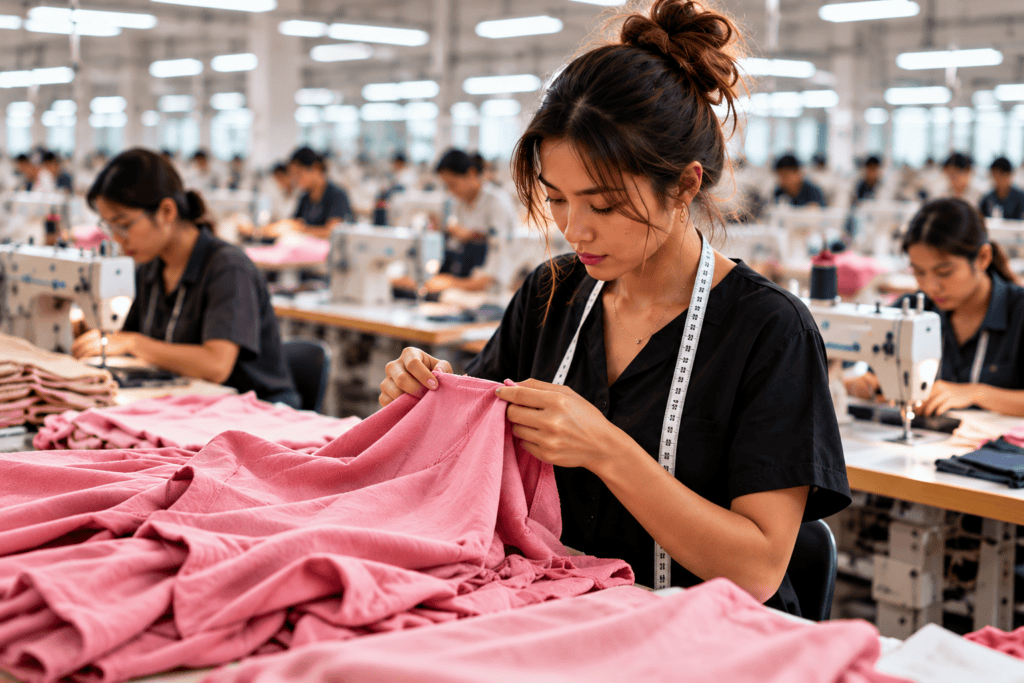
Your samples are approved, the fabrics are selected, and production costs have been agreed upon. You’re getting closer to seeing your collection become a reality, but moving from approved samples to bulk production introduces another set of details that need careful attention.
A small misunderstanding at this stage can create problems that are difficult to correct later. The shipment might arrive with the wrong labels, the fabric color might differ from the approved sample, or the factory might produce the wrong quantities in certain sizes. Discovering these issues when customers are already waiting for your collection can disrupt your launch, which is why production requirements need to be confirmed before manufacturing begins.
Make Sure Every Detail Is Approved Before Production
Before your manufacturer starts cutting fabric, take one final look at the specifications for every style in your collection.
That means more than checking whether the garments look right. Confirm the fabrics, colors, measurements, trims, finishing details, labels, and packaging. You should also have an accurate breakdown of quantities for every style, size, and color.
For example, if you’re producing 200 pairs of pants in three sizes and two colors, the factory needs more than the total order quantity. It needs an exact breakdown showing how many pieces to make in each size and color combination. Confirming these quantities before cutting begins helps prevent mistakes that may be difficult or costly to correct later.
It’s equally important to confirm that the factory has the latest version of your technical specifications and the correct approved sample. If you changed the pocket shape, adjusted the garment length, or replaced a trim during development, those decisions need to appear in the final production documents. Otherwise, the factory could follow an earlier version of the design, even if the changes were discussed and approved during sampling.
Quality Control Starts Before the Collection Is Finished
Quality control shouldn’t be treated as something that happens only after the garments are finished. If the same construction problem is repeated throughout a production run, discovering it during the final inspection may leave hundreds of pieces requiring attention. Depending on the project and the inspection arrangements, quality checks can be carried out at different stages to identify issues before they affect the entire order.
Material inspection. Before fabrics and trims are used, they can be checked against the agreed specifications. This helps identify differences in materials before they become part of the finished garments.
In-process quality checks. During manufacturing, selected measurements, construction details, and sewing operations can be reviewed to identify problems while production is still underway.
Final inspection. Before shipment, finished garments can be checked for appearance, measurements, workmanship, labeling, and packaging according to the agreed quality standards.
Imagine that a jacket sleeve isn’t sitting correctly because of a construction issue. If the problem is discovered early, the production team can investigate the cause and agree on a correction before the same mistake affects the entire order.
No inspection process can guarantee that every piece will be completely free of defects. But checking quality throughout production can help catch problems before they become more expensive and difficult to resolve.
Don’t Leave Labels and Packaging Until the Last Minute
A clothing label might seem like a small detail compared with the fabric, fit, or overall design. But once you’re creating products under your own brand, labeling becomes part of both your product presentation and your responsibilities as a seller.
Before production, confirm the type of brand label you want, its size, material, design, and placement. You may also need to include required product information, such as fiber content, care instructions, and country of origin, depending on where the clothing will be sold.
If you’re planning to sell apparel in the United States, labeling requirements should be considered before the garments go into production, not after they’re packed for shipping. A logo label alone doesn’t replace the information that may be legally required.
Packaging should be discussed at the same stage because it affects how the garments are prepared for shipment, how much the order costs, and how customers receive their purchases.
One brand may need nothing more than individual protective bags for each garment. Another might want branded boxes, printed inserts, or specific folding and presentation requirements.
Those choices affect more than appearance. They can influence packaging costs, shipping preparation, and what customers experience when they open their orders.
Plan Your Shipping Before You Announce the Launch
Your collection is finished at the factory. That’s an exciting milestone, but the clothes aren’t necessarily ready to reach your customers.
Depending on your manufacturing location and delivery arrangements, the order may still need to go through transportation, export documentation, customs clearance, and final delivery to your warehouse or fulfillment partner.
Before confirming your launch schedule, make sure you understand who is responsible for arranging transportation, which shipping expenses are included in your quote, and when responsibility for the goods transfers between the parties.
These arrangements are especially important when your manufacturer is located overseas. The shipping method you choose can affect both transportation costs and delivery times, while customs procedures and unexpected delays may influence when the collection actually reaches your warehouse or fulfillment partner.
Imagine you’ve already announced that your collection will launch on a specific date, but the shipment hasn’t arrived yet. Now you’re dealing with disappointed customers before they’ve even had a chance to try your products.
It’s better to build some flexibility into your schedule and confirm the logistics arrangements before making firm promises about when the collection will be available.
Think About Your Next Order Before the First Launch
Let’s say your first collection goes live and one particular style starts attracting attention. Customers love the fit, and you’re already thinking about bringing it back in another color or adding more sizes.
Reproducing a successful style requires more than simply placing another order for the same quantity. Your manufacturer needs to confirm that the approved design can be produced again under the current material and manufacturing conditions, particularly if you’re introducing new colors or sizes.
You should still check whether the original materials are available and whether the manufacturer can offer the same production conditions. Fabric prices may change, trims may be discontinued, and the factory’s schedule may look different from when you placed your first order.
It’s worth discussing these details with your manufacturing partner early. Find out how patterns and samples will be stored, whether materials can be sourced again, and how future design changes will be documented and approved.
Your first collection doesn’t have to be a one-time project. With the right preparation, it can become the starting point for a product line you continue developing.
From Your First Collection to a Growing Clothing Business
Getting your clothing into customers’ hands is a major achievement. But it’s also the beginning of a different kind of learning.
Now you can see how people respond to the actual products. Do the sizes fit as expected? Does the fabric feel the way customers imagined? Which styles are selling, and which ones are being returned? Are shoppers asking for different colors or pointing out details you hadn’t considered?
That feedback can help you decide what to produce again, what to improve, and which ideas are worth exploring next.
This is also why a good manufacturing relationship matters beyond the first order. When your product specifications are properly maintained and changes are clearly communicated, it’s easier to keep developing your collection without starting from scratch every time.
Launching a clothing brand isn’t simply about getting the first batch made. It’s about building a process that allows you to learn from your customers, improve your products, and make thoughtful decisions about what comes next.
How Fashion Atlas Group Helps You Build Your Own Clothing Brand
Creating a clothing collection involves much more than finding a factory that can sew your designs. Between the first idea and the finished production order, someone needs to source the right fabrics, coordinate sample development, confirm construction details, organize manufacturing, and make sure the garments meet the agreed specifications.
For a new clothing brand, managing all these steps can be challenging, especially when product development and manufacturing take place in different countries. A simple question about fabric availability or a change to a sample may involve several suppliers and production teams, each working on a different part of the project.
Fashion Atlas Group works with clothing brands to manage the steps between product development and finished production. This includes coordinating material sourcing, sampling, manufacturing, quality control, and logistics with production partners. Instead of treating these as separate tasks, the company helps keep the process organized around the brand’s approved designs and production requirements.
From Your First Ideas to Production Requirements
Not every clothing brand starts with finished patterns and a complete tech pack. Some founders have a collection of reference images, a clear idea of their target customers, and a few styles they want to develop, but they’re still figuring out how to turn those ideas into garments.
For example, you might know that you want to create a small collection of contemporary women’s clothing inspired by current fashion trends. You’ve chosen several silhouettes and have a particular fit in mind, but you haven’t yet decided which fabrics will work or what technical details a manufacturer will need.
Before sampling can begin, those initial ideas need to become clear production requirements. That may involve defining garment proportions, discussing fabric options, identifying construction details, and determining which specifications still need to be developed. These decisions give the manufacturing team a more reliable starting point than reference images alone.
Fashion Atlas Group helps organize this development process and coordinate communication with manufacturing partners. This can be particularly useful for brands that want to create original clothing inspired by popular styles rather than simply resell existing products.
Fabric Sourcing and Sample Development
A design can look convincing on paper and still need adjustments once the fabric is selected and the first sample is made. The material needs to do more than match the color and texture you imagined. It also has to work with the garment’s construction, intended fit, and everyday use.
For example, a brand developing a summer collection may need to compare several lightweight fabrics before choosing one that provides the right balance of comfort, opacity, and drape. Reviewing material options and testing them in samples helps the brand make decisions based on how the finished garments actually perform, rather than relying on swatches or product photographs alone.
Fashion Atlas Group helps coordinate fabric sourcing and sample development with production partners, including communication about material options and requested design adjustments. This allows brands to review proposed changes and make informed decisions before approving garments for bulk production.
Production Coordination and Quality Control
Once the samples are approved, the focus shifts to organizing the production order. Quantities need to be confirmed, sizes and colors allocated, materials coordinated, and manufacturing requirements communicated clearly.
Fashion Atlas Group works with production partners to coordinate these steps and support quality control processes. For the brand, having agreed specifications and an approved sample provides a reference for evaluating whether the finished garments match the intended design.
Because production requirements vary by garment and project, Fashion Atlas Group discusses manufacturing options in relation to each collection’s materials, construction, quantities, and development needs. This helps brands understand the practical conditions of their orders before moving forward.
Support Beyond the Production Stage
Finishing the garments is an important milestone, but there are still practical details to manage before the collection reaches its destination. Packaging, shipment preparation, and logistics all need to be coordinated as part of the overall project.
And if a brand plans to reorder a successful style, keeping track of the approved fabrics, measurements, and construction details becomes especially valuable. Those records provide a starting point for discussing future production, even when material availability or manufacturing conditions have changed.
Fashion Atlas Group also coordinates the practical steps involved in preparing completed orders for shipment and delivery. For brands planning additional collections or reorders, maintaining clear communication about production requirements and material availability can help make future manufacturing decisions easier to manage.
If you’re planning to launch your own clothing collection, you can share your concept, intended styles, and production requirements with the Fashion Atlas Group team. From there, you can discuss possible approaches to product development, material sourcing, sampling, and manufacturing clothing under your own label.
Frequently Asked Questions About Starting a SHEIN-Style Clothing Brand
1. Can You Legally Start Your Own SHEIN-Style Clothing Brand?
You can generally start an independent clothing brand inspired by current fashion trends, but you need to respect applicable intellectual property laws and avoid suggesting that your business is affiliated with SHEIN.
You can explore popular silhouettes, colors, and styling directions when developing your collection. However, specific designs, prints, artwork, logos, and other elements may be protected by intellectual property rights. Before producing or marketing a design based closely on an existing product, it’s worth checking whether any legal restrictions apply. Your branding should also make it clear that you’re operating an independent clothing business.
2. Do You Need to Design Every Clothing Style From Scratch?
Not necessarily. It depends on the manufacturing approach you choose and how much control you want over the finished product.
With private label manufacturing, you may be able to select existing garment styles and customize certain details, such as labels, colors, or packaging, depending on the supplier. If your brand needs an original silhouette, a particular fit, or unique construction details, custom clothing development may be a better option. Either way, you’ll still need to confirm materials, sizing, quality expectations, and branding requirements before production.
3. What Is the Minimum Order Quantity for a Clothing Brand?
There isn’t a universal MOQ for clothing manufacturing. Minimum quantities depend on the garment, fabric availability, construction requirements, and the supplier’s production arrangements. A style made with readily available materials may have different minimums from one requiring custom-dyed fabric or specialized trims.
When requesting a quote, ask whether the MOQ applies per style, per color, or to the entire order. You should also confirm how the quantity can be divided among sizes, since those details affect how you plan your first collection.
4. Do You Need Samples Before Bulk Clothing Production?
If you’re developing original clothing designs, reviewing samples before bulk production is an important step. A physical sample lets you evaluate the garment’s fit, fabric, construction, measurements, and workmanship before committing to a larger order.
If something doesn’t meet your expectations, you can discuss the necessary changes with your manufacturer and review an updated sample when needed. Once approved, the sample and the latest technical specifications provide a reference for production and quality checks.
5. How Much Does It Cost to Start Your Own Clothing Brand?
The cost depends on how many styles you want to launch, the materials you choose, the complexity of the garments, your initial order quantities, and whether you’re using private label or custom manufacturing.
Your budget may need to cover more than the garments themselves. Product development, samples, technical documentation, labels, packaging, shipping, and the expenses involved in launching your store can all add to the total. To get a more useful manufacturing estimate, prepare an outline of your designs, expected quantities, size range, and material requirements before requesting a quote.
6. How Do You Find a Manufacturer for SHEIN-Style Clothing?
Start by deciding whether you want to customize existing garments or develop an original collection from scratch. That choice will help you identify manufacturers with the services and production capabilities your project actually needs.
Look beyond the price per garment. Ask about experience with your clothing category, sample development, fabric sourcing, minimum order quantities, quality control, and shipping arrangements. It’s also worth clarifying who will manage technical specifications, approve changes, and communicate with the factory throughout production.
If you need support coordinating product development and manufacturing, Fashion Atlas Group works with clothing brands on material sourcing, sampling, production management, and quality control. The right approach will depend on your designs, order quantities, and development requirements.