
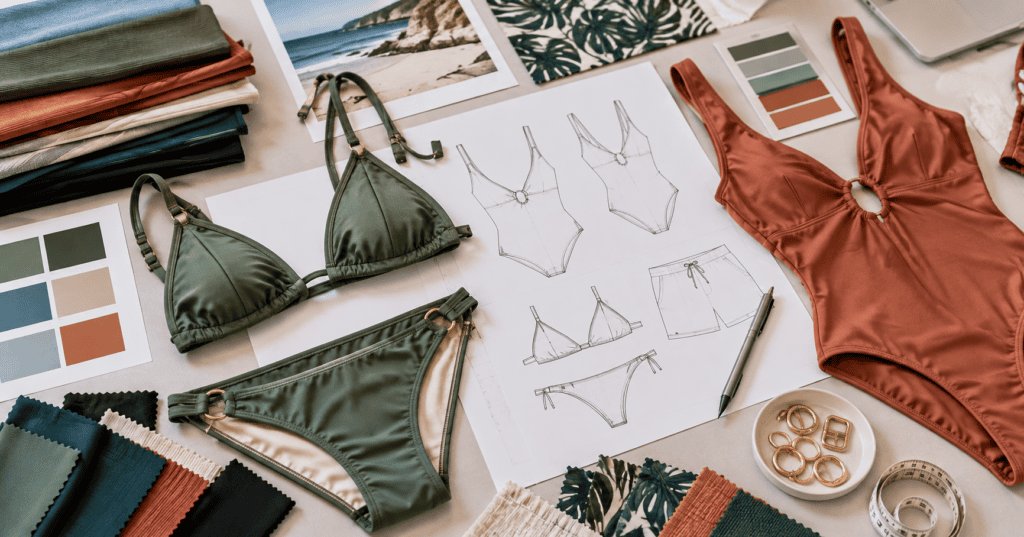
Developing a swimwear collection involves much more than choosing attractive designs and finding a fabric with enough stretch. Every element, from the pattern and lining to the smallest hardware detail, needs to work together to create a garment that looks right, fits comfortably, and performs as intended.
These decisions are closely connected. A different fabric can change how a swimsuit fits, while adding a lining may affect its stretch, coverage, and support. Even a print that looks perfect on a digital design can require adjustments once it is applied to individual pattern pieces. For clothing brands, successful swimwear development means considering these details early and making sure the finished designs can be reproduced consistently during production.
Understanding how to develop a swimwear collection can help brands make informed decisions, reduce unnecessary revisions, and prepare their designs for manufacturing. This applies whether you’re launching your first swimwear line or expanding an existing collection.
Define Your Swimwear Collection Before Development Begins
A successful swimwear collection starts with a clear understanding of what the brand wants to create. Before selecting fabrics or developing samples, it’s important to establish the overall direction of the collection, including its target audience, product range, design features, and intended price point.
For example, a resortwear brand developing a coordinated collection of bikinis, one-piece swimsuits, and men’s swim shorts may want consistent colors and prints across all styles. However, each garment will still have its own requirements for fit, coverage, construction, and materials. A bikini top designed for additional support may require different components from a simple triangle style, while men’s swim shorts involve entirely different pattern and construction considerations.
At this stage, brands should define several essential details:
- Product types and number of styles
- Target customers and intended fit
- Size ranges and coverage preferences
- Colors, prints, and branding elements
- Fabric and performance requirements
- Target production quantities and price range
- Packaging and presentation requirements
Documenting these decisions in a development brief gives the production team a clearer understanding of the collection and helps identify potential challenges before sampling begins. It also makes it easier to maintain a consistent brand identity while allowing each design to meet its individual functional requirements.
Choose the Right Starting Point: Sketches, Tech Packs, or Reference Samples
Not every swimwear collection begins with a complete set of technical specifications. Some brands approach manufacturers with original sketches and design concepts, while others already have detailed tech packs, technical drawings, or physical samples that communicate their intended designs.
Each starting point can support the development process, provided the information is clear enough to translate the concept into a production-ready garment. Sketches are useful for communicating the overall silhouette and visual direction, while tech packs provide more precise information about measurements, materials, construction, and branding. Physical reference samples can be especially helpful when a brand wants to demonstrate details that are difficult to describe accurately, such as fabric feel, coverage, or the way a garment fits.
However, a reference garment should never be treated as a complete production specification. Even when a brand provides an existing swimsuit as a starting point, the new design may require different fabrics, adjusted proportions, custom prints, or changes to construction details. These decisions need to be documented before sampling so the production team understands exactly what the brand wants to achieve.
Clear communication at this stage helps reduce misunderstandings and creates a stronger foundation for the sampling process. It also allows brands to develop products that reflect their own identity rather than simply reproducing an existing garment.
Select Swimwear Fabrics Based on Performance and Design Requirements
Choosing the right fabric is one of the most important decisions in swimwear development. While color, texture, and appearance help define the collection’s visual identity, the material must also provide the stretch, recovery, comfort, and durability required for the intended design. A fabric that looks appealing on a sample card may behave differently once it is cut, sewn, and worn.
Many swimwear fabrics combine nylon or polyester with elastane to provide flexibility and support. However, similar-looking materials can vary considerably in weight, stretch direction, recovery, opacity, and surface texture. These differences influence how the garment fits, how comfortably it moves with the body, and whether it maintains its intended shape over time.
Fabric selection should therefore consider several characteristics:
- Stretch and recovery: The material should provide sufficient flexibility while returning to its original shape after stretching.
- Weight and opacity: Fabric thickness and coverage should suit the garment’s design, particularly when the material becomes wet.
- Comfort and texture: The surface should feel appropriate against the skin and work with the intended construction.
- Color and print compatibility: The fabric must support the desired colors, printing techniques, and visual effects.
- Resistance to environmental exposure: Depending on the intended use, relevant considerations may include chlorine, saltwater, sunlight, and repeated washing.
These characteristics should be evaluated in relation to the finished product rather than independently. For example, a fabric with excellent stretch may still be unsuitable for a structured swimsuit if it lacks sufficient recovery or support. Similarly, a material selected for its print quality may require additional evaluation to ensure that its performance remains appropriate for the intended fit.
Identifying these limitations during fabric selection can help brands avoid unnecessary material changes later in development. For brands evaluating different suppliers and material options, a structured approach to apparel product sourcing can also help align fabric choices with the collection’s technical and production requirements.
Consider Swimwear Lining as Part of the Overall Construction
Lining plays an important role in swimwear development, influencing coverage, comfort, support, and the way a garment fits against the body. Although it may not be visible from the outside, the lining can significantly affect the performance of the finished swimsuit and should be considered during material selection rather than added as an afterthought.
The appropriate lining depends on the garment’s design and intended function. Some styles require additional coverage or opacity, while others may benefit from structural support or a smoother interior finish. The lining’s weight, stretch, and recovery should also be compatible with the outer fabric, particularly in fitted garments where the two layers need to move together.
A common development challenge occurs when the outer fabric and lining behave differently under tension. If the lining stretches less than the main material, the completed garment may feel tighter than expected or restrict movement. Conversely, a lining with insufficient recovery may not provide the intended level of support.
For this reason, brands should evaluate the interaction between the two materials during sampling. Testing fabric and lining separately can provide useful information, but the final decision should be based on how they perform together in the completed garment.
Develop Swimwear Patterns With Fit, Coverage, and Movement in Mind
Swimwear pattern development requires careful attention to body proportions, fabric behavior, and the intended silhouette. Unlike garments that rely primarily on structured shapes or looser fits, many swimsuits depend on controlled stretch to achieve the desired combination of comfort, coverage, and support.
The pattern must account for how the garment will sit on the body and respond to movement. Depending on the style, important areas may include bust and back coverage, neckline shape, torso length, waist position, leg openings, straps, and the placement of supporting components. These requirements can differ substantially between bikinis, one-piece swimsuits, and men’s swim shorts.
Fit adjustments should also be evaluated in relation to the design’s original intention. Increasing coverage, for example, does not necessarily mean making the entire garment larger. A change to the neckline, leg opening, or pattern proportions may provide the desired result without altering the overall fit.
Fit should be assessed through movement as well as appearance. A swimsuit may look correct when the wearer is standing still but behave differently when walking, bending, or stretching. Reviewing these conditions during development can help identify problems before the design is approved for production.
Plan Swimwear Prints Before Production
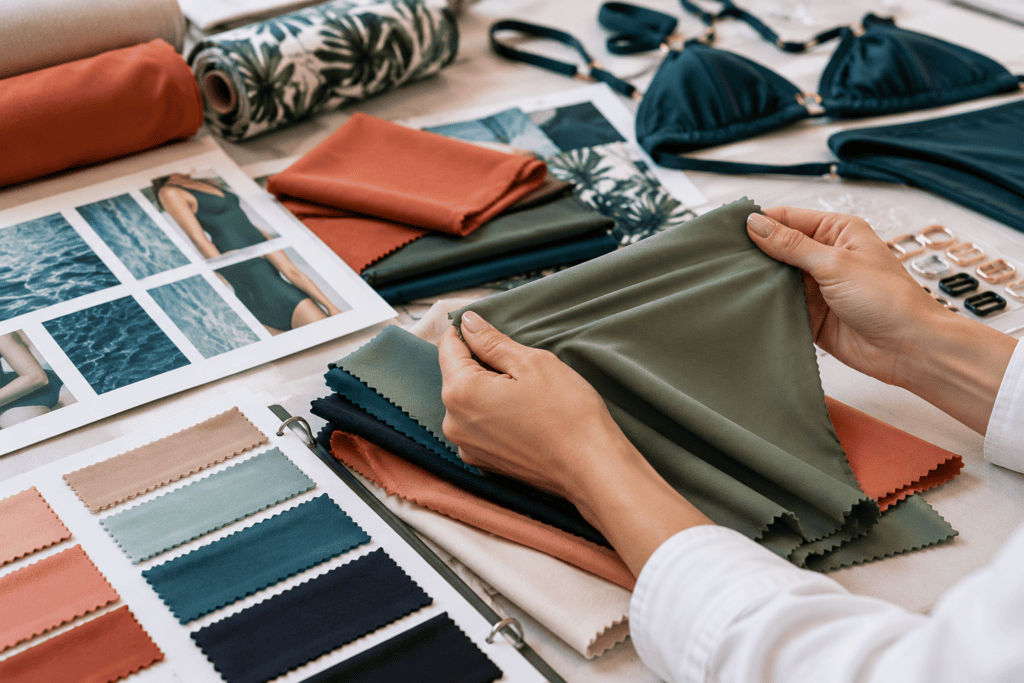
Prints can define the visual identity of a swimwear collection, but developing them involves more than selecting attractive artwork. The design must work with the garment’s pattern, proportions, fabric, and construction. A print that looks balanced in a digital illustration may appear quite different once it is applied to individual pattern pieces and assembled into a finished swimsuit.
Print scale and placement require particular attention because the same artwork can look different across garment styles and sizes. Large motifs may work well on a one-piece swimsuit but need adjustment for smaller bikini components. Seams, fabric stretch, and pattern proportions can also affect how the finished print appears.
When developing printed swimwear, several details deserve attention:
- Print scale and proportions: Artwork should be evaluated in relation to each garment’s dimensions and pattern pieces.
- Placement and orientation: Important design elements need to appear in the intended locations on the finished product.
- Color consistency: Approved colors should be achievable with the selected fabric and printing process.
- Fabric compatibility: The printing method should suit the material’s composition, texture, and stretch characteristics.
- Size variations: Print placement and proportions may need adjustment across different garment sizes.
These considerations become particularly important when a collection includes multiple styles. A coordinated range of bikinis, one-piece swimsuits, and cover-ups may share a common print direction, but applying identical artwork to every garment does not always produce a consistent visual result.
Print development should therefore be coordinated with pattern making and sampling rather than handled as a separate decorative step. Reviewing the artwork on actual garment samples helps brands identify issues with scale, placement, and overall appearance before approving the design for bulk production.
Define Hardware and Branding Details During Development
Brand identity in swimwear extends beyond the choice of colors and prints. Custom labels, decorative hardware, closures, and other finishing details can contribute to a collection’s appearance and help distinguish its products in the market. However, these elements also introduce practical considerations that should be addressed during development.
Swimwear hardware may include rings, sliders, clasps, adjusters, and decorative components. Depending on the design, these parts can influence strap adjustment, garment support, comfort, and construction. Their dimensions, weight, placement, and attachment methods should be evaluated alongside the fabric and pattern rather than selected solely for appearance.
Material suitability is another important consideration. Components intended for swimwear may be exposed to moisture, saltwater, chlorine, and repeated wear, so the appropriate materials and finishes should be selected according to the garment’s intended use. A decorative element that looks suitable in a product photograph may not perform as expected when incorporated into a finished swimsuit.
Branding requirements should also be established early in the development process. These may include woven labels, printed logos, branded hardware, care labels, hangtags, or customized packaging. Each element should be documented with the necessary specifications, including dimensions, placement, materials, and approved artwork.
When hardware and branding details are incorporated into the sampling process, brands can evaluate how they interact with the finished garment before production begins. This approach helps ensure that the approved sample reflects the intended product, including the smaller details that contribute to its overall appearance and functionality.
Develop the First Sample to Evaluate the Complete Design
Understanding how to develop a swimwear collection also means recognizing the role of the first sample in evaluating the design. Fabrics, patterns, lining, prints, and hardware may have been reviewed separately during development, but their combined performance can only be assessed once the product has been assembled.
The objective at this stage is not simply to confirm that the sample resembles the original design. Brands should examine whether the garment meets the intended requirements for fit, coverage, comfort, construction, and overall appearance. Even when a swimsuit follows the approved technical drawings, adjustments may still be necessary after evaluating how it fits on the body.
During the sample review, attention should be given to how the garment fits, moves, and maintains its intended shape. Construction details, elastic tension, component placement, and the overall appearance should be checked against the approved design requirements. Any differences between the sample and the original specifications should be documented for further evaluation.
A structured sample review helps identify issues that may be difficult to recognize from photographs or technical drawings alone. When possible, evaluating the garment on a fit model or an appropriately sized wearer can provide useful feedback about how it behaves during normal movement.
The findings from this review become the basis for the next stage of development. Rather than expecting the first sample to be production-ready, brands should treat it as a practical opportunity to test the design and determine which details need refinement.
Turn Sample Feedback Into Clear, Actionable Revisions
Sample revisions are a normal part of swimwear development, particularly when a collection includes new silhouettes, custom materials, or construction details. The effectiveness of this stage depends largely on how clearly the brand communicates its feedback to the development team.
General comments such as “the fit needs improvement” or “the straps don’t feel right” may identify a concern, but they do not provide enough information to guide a precise correction. More useful feedback describes the affected area, explains the problem, and identifies the intended result.
For example, if a swimsuit provides insufficient coverage at the back, the revision request should specify where additional coverage is needed. If the straps create excessive tension, the team may need to review their length, positioning, or relationship to the overall pattern. These distinctions help pattern makers and sample technicians determine which adjustments are appropriate without unintentionally changing other parts of the design.
Photographs, annotated technical drawings, measurement notes, and written comments can all support the revision process. For collections containing multiple styles, maintaining a separate record for each design helps prevent confusion and makes it easier to track changes between sample versions.
It is also important to distinguish between necessary corrections and new design requests. Adjusting a neckline to achieve the originally approved coverage is different from introducing a new silhouette after sampling has begun. Both changes may be possible, but they can have different implications for development time, material requirements, and cost.
Review Revised Samples Before Final Approval
Once revisions have been completed, the updated sample should be evaluated against the feedback provided during the previous review. The purpose of this stage is to confirm that the requested changes have been implemented correctly and that they have not introduced new problems elsewhere in the garment.
Swimwear adjustments can affect multiple areas of a design. Changing a pattern piece may influence seam placement or coverage, while modifying elastic tension can alter how the garment fits and moves. Replacing a fabric or lining may also require additional evaluation, even when the overall design remains unchanged.
Brands should therefore review the complete garment rather than checking only the details that were revised. Fit, construction, comfort, appearance, and functional components should still meet the intended specifications. Any remaining discrepancies should be documented and resolved before the design moves forward.
Final sample approval is an important production milestone because it establishes the reference for the finished product. The approved garment should be supported by updated technical specifications that reflect the agreed materials, measurements, construction details, colors, prints, and branding requirements.
Confirm Size Grading Before Bulk Production
Approving the fit of a swimwear sample in one size does not automatically mean that the design will perform equally well across the entire size range. Each size needs to maintain the intended proportions, coverage, and support while accommodating differences in body measurements.
Size grading involves developing additional sizes from an approved base pattern according to an established measurement system. However, swimwear requires particular attention because fabric stretch, elastic tension, and garment construction can influence how each size fits. Simply increasing measurements proportionally may not produce the desired results for every style.
For example, a bikini top may require adjustments to strap positioning or coverage as sizes increase, while a one-piece swimsuit may need careful consideration of torso length and overall proportions. Men’s swim shorts introduce different requirements related to waist measurements, rise, leg openings, and intended fit.
Brands should establish their size range and measurement specifications before production begins. Depending on the complexity of the design, evaluating samples in additional sizes can help identify grading issues that may not be apparent from the base-size sample alone.
A clearly defined grading system supports greater consistency across the collection and provides the manufacturing team with the information needed to reproduce each approved size.
Finalize Production Specifications and Approved Materials
Once the design, fit, and size range have been reviewed, the next step is to confirm the specifications that will guide bulk production. These documents should reflect the final approved version of each garment, including any adjustments made during sampling.
Production specifications typically cover fabric composition, material references, measurements, construction methods, stitching requirements, lining, elastic components, hardware, prints, labels, and packaging. Color references and approved artwork should also be documented where applicable.
Consistency between the approved sample and the written specifications is particularly important. If a fabric, component, or construction detail changes during development, the production documents need to be updated accordingly. Otherwise, the manufacturing team may be working from information that no longer represents the intended product.
For collections containing several styles, each design should have its own complete specifications, even when certain materials or branding elements are shared. This helps prevent differences between products from being overlooked and gives production teams a clear reference for each garment.
Establish Quality Control Requirements Before Manufacturing
Quality control should be planned before production begins rather than treated solely as a final inspection. For swimwear, the process involves checking whether the finished garments meet the approved specifications for fit, measurements, materials, construction, and appearance.
Because swimwear combines stretch fabrics with elastic components and close-fitting patterns, relatively small inconsistencies can affect the finished product. Variations in seam construction, elastic application, or component placement may influence comfort, coverage, and garment performance.
Quality control requirements should reflect the characteristics of each design. Depending on the product, relevant inspection points may include:
- Materials: Confirming that fabrics, linings, and components match the approved specifications.
- Measurements: Checking garment dimensions against the established size specifications and tolerances.
- Construction: Reviewing seams, stitching, elastic application, and component attachment.
- Appearance: Evaluating color consistency, print placement, labels, and visible finishing details.
- Functionality: Checking closures, adjustable components, and other features that affect how the garment is worn.
- Packaging: Confirming that finished products meet the agreed labeling and presentation requirements.
These checks can be incorporated at appropriate stages of manufacturing, including material inspection, in-process production reviews, and final product inspection.
Defining quality expectations in advance helps manufacturers identify discrepancies earlier and gives brands a clearer basis for evaluating whether the completed order meets their requirements.
For a closer look at how these checkpoints work throughout apparel production, see our guide to quality control in clothing manufacturing.
Plan Production Around the Collection’s Launch Timeline
Planning is another essential part of learning how to develop a swimwear collection. Seasonal launches, retail schedules, and marketing campaigns all require brands to account for the full development process rather than manufacturing time alone.
A realistic timeline needs to consider fabric and component sourcing, pattern development, sample production, fitting reviews, revisions, size grading, material approvals, bulk manufacturing, quality control, and shipping. Some activities may overlap, but others depend on decisions that must be finalized before the next stage can begin.
Custom fabrics, printed materials, branded hardware, and specialized components may require additional coordination. If these elements are not approved early enough, they can affect the production schedule even when the garment’s main design has already been finalized.
Brands should also allow time for sample revisions and unexpected adjustments. Planning around an ideal scenario in which every material is immediately available and every sample is approved on the first attempt can create unnecessary pressure later in the process.
Working backward from the required delivery date helps establish practical deadlines for design approvals, material confirmations, and production milestones. It also allows the brand and manufacturing team to identify decisions that could affect the schedule before they become urgent.
From Swimwear Concept to Production-Ready Collection
For brands learning how to develop a swimwear collection, coordinating creative design with technical execution is essential. Fabric selection, pattern development, lining, fit, prints, and finishing details all influence the finished product, making it important to evaluate these elements together rather than as separate decisions.
Moving from an initial concept to a production-ready collection takes clear specifications, practical sample evaluations, and timely decisions throughout development. Addressing these requirements before bulk manufacturing helps brands maintain consistency between their approved designs and finished products.
Fashion Atlas Group supports brands throughout this process, from material sourcing and sample development to production coordination and quality control. For businesses planning a new swimwear line or expanding an existing range, our custom swimsuit manufacturing services provide a starting point for discussing design requirements, customization options, and production needs.